Southeastern Flyworks

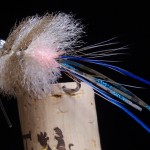
In preparation for some fly-fishing on the North side of the Dominican Republic, I connected with Capt Randy Rhode, the Owner of North Coast Sportfishing out of Cabrera. After some logistics planning, Capt Randy showed me a few pics of the most amazing pelagic flies – flies tied specifically for blue water fishing. He mentioned his supplier of saltwater flies was located back in the US. After further back and forth, I had to ask who was designing these amazing pelagic creations. Capt Randy happily shared his US supplier was Mack Bryson of Southeastern Flyworks in Albany, GA.

Fortunately I was able to find Mack and uncover his wealth of talent in fly-tying. It goes without saying, I was inspired to share some of his creations. Enjoy some of his great fly patterns below and look for more to come.

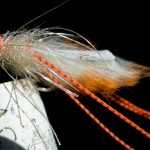
Second Fiddle Crab
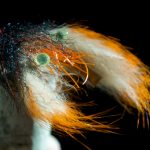
Bug’s Redfish Tickler: Orange & Tan
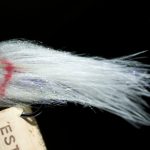
Bruiser Baitfish: Gray & White

Mack ties every saltwater pattern available – for a greater selection of stock patterns offered, visit his fly shop at Southeastern Flyworks. If interested in purchasing any of the referenced flies, pricing is included below.

Pricing

Second Fiddle Crab: $7.00 ea. Purchase Now
Bug’s Redfish Tickler: $7.00 ea. Purchase Now
Bruiser Baitfish: $7.00 ea. Purchase Now

Other Details

If looking for any special fly patterns, please make sure to inquire first. Mack will ship any assortment needed. For specific questions, feel free to connect via his web site Southeastern Flyworks, direct e-mail, or visit his Instagram page.

Shipping

In-stock flies typically ship within 24 hours.

Mack’s Bio

Mack’s passion for fly fishing and tying flies began over 20 years ago in the basement of a friend’s house in Martinsville, VA. A fascination in duplicating a fly/ bug with synthetic materials so accurately was enough to hook him for life – the fact a fish would feed on an authentic replication was simply over-the-top. His pursuit started with bass, bluegill, and trout in the local lakes and rivers, consuming most of his free time. The pond at his family’s farm became his “playground” and testing facility for new creations from the vise. Often trips to Roanoke, VA to spend time with the folks at Blue Ridge Fly Fishers allowed Mack an ongoing environment for learning fly-tying applications. Mack is also a member of the Squimpish Flies Pro Team, fishing all the latest materials for Squimpish R&D. Over the last few years Mack has continued to fish coastlines in FL from Ponte Vedra down to Tampa. To this day he still says his discoveries in fly-tying and fly-fishing never cease to amaze.

Mack spends a considerable amount of time enjoying his passion (Southeastern Flyworks), traveling, and raising his family in GA. Visit Southeastern Flyworks for more of Mack’s fly-tying creativity and fly-fishing lifestyle.

Indigenous Inspiration: Florida Crab Patterns

TYING BLUE CRAB FLIES

Call it “matching the hatch” or what you will, sticking close to local fly patterns will always yield reasonable results. A good majority of “tailing” fish like to pick up crustaceans off the bottom, especially in skinny water (on the flats or in the shallows).

Pictured above is a Baby Blue Crab, very similar to those which populate Biscayne Bay and all of South Florida. Biscayne Bay is a sizable body of water offering the best fishery imaginable. Tarpon, Permit, Bonefish, Redfish, Seatrout, Ladyfish, Baracudda, shark, and various types of Jacks are only a few of the species found in Biscayne that will take a fly. When it comes to fishing crab patterns, Permit, Bonefish, and Redfish find them irresistible.

Fishing crab patterns can be tricky. A seasoned saltwater fly-fisherman will tell you, there’s a fine line for making a solid cast for an approaching fish. For some fish, casting a crab pattern two feet of its nose will get the best results. For others, casting a crab pattern six feet in front of their swim path will be more effective. It’s important to remember, a crab’s natural environment is on the bottom. Fly-fishing the crab pattern on the bottom will get you closer to striking fish. Keep in mind, crabs also twitch and for the most part move slowly (smaller strips of fly-line).

Many fly-fishing experts argue the color of a fly pattern isn’t as important as moving a crab fly properly – meaning a fish is spooked more by a crab not moving the way that is should versus a crab with odd coloring.

BLUE CRAB VARIATIONS

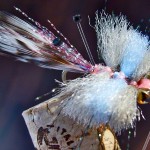
Below are two simulations of a local Blue Crab. Namely a Merkin Crab: Pink & Blue and a Cracked Merkin Crab Fleeing: Biscayne Blue. Build your own version of a Blue Crab – the possibilities are endless. Take a look at Fly Mastery’s crab patterns to help inspire your fly tying creativity.

Questions or comments? Please feel free to reply to our posts – We will be glad to offer additional advice or information if needed.

Flies by Backwater Fly Fishing


Capt Jesse Males connected with us at Fly Mastery back in JAN 2016. After some time exchanging e-mails and photos, it was apparent he also had a passion for fly-fishing, fly-tying, and the adventure that comes with the fly-fishing lifestyle. Over the last two months I received amazing photography of custom fly patterns and some video of various international fly-fishing travel. Not only were the photos well done, but the videos were outstanding. Each video had great fly-fishing action and great perspective. Video soundtracks were well done and the editing first rate. I could tell Jesse had a knack for inspiring others to fly-fish when his videos all seemed to tell a story. Some would include packing up, traveling, arriving, gearing up, sighting hot spots, striking, fighting, landing, releasing fish, cooking fish, and chill’n under the coconut palms remembering the day’s fun.

Needless to say, we are honored Capt Jesse chose Fly Mastery to help share his great fly-fishing and fly-tying creativity. Enjoy some of his great fly patterns below and look for more to come.

  • Redfish L&D (Lunch and Dinner)
  • Backwater Tarpon Toad: Chartreuse
  • Ostrich Clouser Minnow: Olive
  • Margarita Shrimp
  • Simple Micro Shrimp: Olive
  • Ostrich Clouser Minnow: Midnight
  • Crystal River Shrimp
  • Flash Fur Baitfish: Gold
  • Tarantula Shrimp: Olive
  • Poppin Flats Shrimp: Brown

Capt Jesse ties every saltwater pattern available – for a greater selection of stock patterns offered, visit his fly shop at Backwater Flies. If interested in purchasing any of the referenced flies, pricing is included below.

Pricing

Ostrich Clouser Minnows: $15.00 for three. Purchase Now
Redfish L&D: $20.00 for three. Purchase Now
Simple Micro Shrimp: $11.00 for three. e-mail Capt Jesse to special order
Crystal River Shrimp: $16.00 for three. e-mail Capt Jesse to special order
Flash Fur Baitfish: $21.00 for three. Purchase Now
Tarantula Shrimp: $19.00 for three. e-mail Capt Jesse to special order
Poppin Flats Shrimp: $22.00 for three. Purchase Now

Other Details

Jesse ties a majority of his saltwater flies with Gamakatsu and Mustad hooks. He’s currently experimenting with Daiichi 2546 hooks – if a fan of Daiichi, request for them specifically. If looking for any special fly patterns, please make sure to inquire first. He will ship any assortment needed. For specific questions, feel free to connect with Jesse via Facebook, YouTube, his web site Backwater Fly Fishing, or his e-mail.

Shipping

First Class USPS shipping is $6.00 and all orders over $50.00 ship free of charge. Orders typically ship inside of one week.

Jesse’s Bio

Captain Jesse Males, an aficionado in the world of fly-fishing. A sportsman, adventurer, and outdoorsman – it’s difficult to categorize his expertise or identify waters he hasn’t fished.

Captain Jesse started fishing at a very young age and was taught to fly-cast by his father at ten years old. This opened up a whole new aspect of fishing and provided him a stack of amazing memories. It wasn’t until Jesse hit college where he spent a majority of his time on the water. Time was mostly spent in pursuit of learning the backwaters that make up both East and West coasts of Central Florida. This included waters between Chassahowitzka and Crystal River on the West coast, as well as waters of the Banana River, Indian River, and Mosquito Lagoon systems. Most exploration in fly-fishing was done via kayak. Nothing gave him more of a challenge or reward than sneaking up on monster fish in the yak and landing a fly within reach.

This fly-fishing lifestyle has taken Jesse to some great destinations and provided him with memorable experiences in the wild. From chasing big salty critters in the Florida Keys, Roosters in Coast Rica, and Trout in the Carolinas and Wyoming, he’s felt blessed to experience fly-fishing at its finest.

Capt Jesse spends a considerable amount of time growing his business (Backwater Fly Fishing and Backwater Flies), traveling, and raising his family in Central Florida. Visit Backwater Fly Fishing for more of Jesse’s fly-tying creativity and fly-fishing lifestyle.


Flies by John Roetman


I first connected with John Roetman at the 2015 IFFF Expo in Fort Lauderdale, FL. He had quite a few folks gathered around his fly-tying bench, all of which were very interested in his display of unique creations. After some time watching John tie one of his latest local patterns, it was apparent he had years of experience at a vise – that and a knack for demonstrating how to move through the design and tying process. Needless to say, we were thrilled to have him send us a few flies (below) to post on Fly Mastery. We anticipate sharing more of John’s creations in the next few months.

  • Dock Lite Special: Blue
  • Gartside’s Fish Head (variation): White
  • Gartside’s Fish Head (variation): Black
  • Mini Finger Mullet: Olive
  • Mackerel Madness: Chartreuse
  • Lenny’s Betty Boop: Black
  • Lenny’s Betty Boop: White

John ties most saltwater patterns and would be willing to sell a few by request. If interested in purchasing any of the referenced flies, pricing is included below.

Pricing

Fish Heads: $3.50
Dock Lite Special: $3.00
Mackerel Madness: $2.50
Mini Finger Mullet: $2.50
Lenny’s Betty Boop: $3.95

Other Details

John ties a majority of his saltwater flies with Orvis SI9034 and Mustad C70SD Big Game hooks. If looking for something special, please make sure to inquire first. He will ship any assortment needed.

Shipping

Please connect with John for pricing on shipping. Orders typically ship inside of one week. For specific questions, feel free to connect with John via e-mail.

John’s Bio

John Roetman is a well known fly-tying and fly-fishing authority here in South Florida. After retiring in 2010 and moving to Hobe Sound, John spends a majority of his time fishing the Treasure Coast. He covers a majority of the ICW, from the Mangroves to the surf. John has been fly-tying and fly-fishing for over 50 years now. He’s always worked in the fishing business, managing and buying for Ramsey Outdoor and Orvis, both in Northeast NJ. John is a lifetime member of Trout Unlimited, CCA Florida, and IFFF. Quite often you’ll find him at various fly-fishing expos throughout the year, demonstrating his tying talent and offering a look at his latest designs/ creations. John has not only fished a majority of the waters here in the US, but those abroad, including many in Canada, New Zealand, Chile, Argentina, Belize, Mexico, and the Bahamas.

Rubber Legs: New Color Options


I was leaving one of the Bass Pro Shops the other day and happen to walk out through the isle displaying all the rubber/ plastic lures. Among all the eye-candy, the replacement rubber “skirts” for spinners and jigs caught my eye. They looked so similar to the Sili and Centipede legs we all buy for tying our flies, but yet in better color options. There were several ways this discovery paid off:

1) These lure skirts are simply rubber legs loosely banded together – cutting the binding band separates all the legs, perfectly cut and ready to tie into any fly pattern.

2) The variety of colors are great! For some reason the coloring is much more creative than what’s typically offered in the fly-tying section of the store, or even on-line.

3) Each pack of skirts seem to include three (3) different colors. At least I found the Fishing Skirts brand did.

4) Each pack of skirts (legs) is competitively priced with other rubber leg manufacturers, however I believe you actually get more legs.

The colors are the best part of the discovery. The metallic flake used is more like a metallic powder, perfectly applied to give just the right effect. As I’m looking to tie a few more crab patterns, I picked up a pack of Carolina Craw and Army Blue Bars. After separating the colors, I can see I made the right choice. One has a great shimmer of chartreuse, some black barring, on a slightly translucent olive leg (pictured) and the other a sky-blue shimmer, some black speckling, on a slightly translucent olive leg. Both colors will work perfectly for tying crab patterns for South Florida.

Take some time to look through the colors, in person – they’re all so vibrant. If you’re like me, it will take a while to figure out how many sets of colors you want to work with – they’re all so great. Check Amazon for their sizable collection too.

If you have additional ideas on where to find new colors or new types of legs, please share below in the comment section. We would very much appreciate the input!

Salty River Fly Company


Last month I noticed a few creative fly patterns on Instagram by Salty River Fly Company – one being their Mayan Cichlid Clouser. After connecting with Jesus Mora (Owner) via e-mail, he decided to send me a few fly patterns to post on Fly Mastery. Patterns included:

  • Brush Crab
  • Redfish Toad: Purple
  • Peacock Baitfish Fry
  • Lion Shrimp: Olive
  • Mayan Cichlid Clouser
  • Origami Shrimp
  • Peacock Clouser
  • Mayan Cichlid

Jesus will tie anything you could dream up. He can replicate/ tie just about anything that swims, hops, walks, or flies. If interested in purchasing any of the referenced flies or others included on any of his sites, pricing is included below.

Pricing

Crystal Minnows: $3.00
Gotchas: $3.00
Clousers (basic): $3.00
Poppers: $4.00
Clousers (deluxe): $5.00
Gurglers: $5.00
Tantrums: $5.00
Toads (Redfish): $5.00
Sea Ducers: $5.50
Toads (Tarpon): $6.00
Crabs: $6.00
EP (deluxe): $6.50

Other Details

Jesus ties flies with an assortment of hooks. If looking for something special, please make sure to inquire first. He will ship any assortment needed.

Shipping

Orders under $50: Shipping is $6.00 (USPS Flat-Rate 3 Day)
Orders $50 and over: Shipping is FREE (USPS Flat-Rate 3 Day)

Orders typically ship inside of one week. For specific questions, feel free to connect with Jesus via Twitter or e-mail.

Jesus’ Bio

Jesus was raised fishing the DC, Maryland, and Virginia (Chesapeake Bay) part of the Northeast. Back and forth between the Northeast and Florida, he spent quite a few years in various fisheries. These days, Jesus spends the majority of his time fly-fishing the Gulf side of Florida, including a good portion of the Everglades and 10,000 Islands. A majority of his fly-fishing is done on foot, wading with alligators and the occasional python. He says it’s all about accessing the “honey holes” back in the Everglades.

If it wasn’t for accidentally flipping his kayak and dumping his custom spinning rig (Van Staal VS150 and custom rod) into the drink, he may have never been introduced to fly-fishing. From that day forward, Jesus has exclusively fly-fished. Jesus shared some good times spent on the water catching his 44 inch Snook, huge Black Drum, Redfish, Tarpon, and many other species.

His passion for fly-fishing didn’t stop there – he jumped into fly-tying wholeheartedly. Today, fly-tying offers a perfect channel for his creativity and entrepreneurial spirit. Jesus recently created the Salty River Fly Company web site and is looking forward to its speedy growth and expanded inventory of fly patterns.

Rock Shrimp: Using Grizzly Hackle


Grizzly hackle is a necessity for every saltwater fly-tying bench – really for all fly-tying benches. Whether making claws, wings, shrimp legs, or simply wrapping the hook shank, Grizzly hackle and its natural barring can’t be beat. Barring gives so much action to flies. Other great colors are available as well, all offering amazing variegation in color.

A few tips when buying hackle:

   Suppliers will offer various grades of pelts (i.e. platinum, gold, silver, bronze, professional, etc.).

   Higher grade pelts offer more feathers, however no difference in feather quality.

   Most suppliers will offer various sizes of pelts, (i.e. full, half, quarter, etc.). Purchasing smaller pelts and more colors may be more cost effective when trying to increase options at the tying bench.

   If looking for small feathers, “hen capes” are best – for large/ long feathers, “rooster saddles” are best.

   For my saltwater fly-tying applications, I use Whiting Bugger Packs. The packs offer fairly long tapered feathers and some smaller as well. Each pack offers a fly-tyer a perfect sample of feathers for tying all types of saltwater flies. For natural colored saltwater flies, see the colors Grizzly, Grizzly Coachman, Furnace, and Barred Dark Ginger.

   For a full selection of hackle and colors, see the Whiting Farms web resource. It helps to see all the options. Whiting is also known for being one of the top three hackle producing farms – many argue they are the best.

In retrospect, looking back over my first year of saltwater fly-tying, I would have made one change in purchasing my materials. I would have invested in Bugger Packs or pro-grade (lowest grade) quarter saddles in more colors right out of the gate. Must-have colors for me include Grizzly, Cree, Coachman, and White. I find these colors to offer more options when tying saltwater fly patterns including shrimp, crab, streamers, and many more.

Recreate these flies at home! A list of materials used to make them are included below. Always keep in mind your local fly-fishing store will most likely have the materials referenced, and typically for less. Materials can also be found at Amazon or any other major on-line resource.

Fly-Tying Materials

[list]
[list_item]Mustad Hook 34007SS (#4)[/list_item]
[list_item]UTC Thread 210, Tan[/list_item]
[list_item]Bead Chain Eyes, Large, Black[/list_item]
[list_item]Krystal Flash, Olive/ Pearl, Royal Blue, Copper, and Gold[/list_item]
[list_item]Krystal Flash, Black/ Pearl[/list_item]
[list_item]Rooster Cape, Grizzly Variant (for body and claws)[/list_item]
[list_item]Berkley Vanish, Fluorocarbon, 30#, Clear (weed guard)[/list_item]
[list_item]Sally Hansen Hard As Nails, Hardener, Clear (#2103)[/list_item]
[/list]

Design Inspiration & Detail

This fly pattern is very simple to make. Technically one long rooster saddle quill (grizzly) could make several flies. Add a little Crystal Flash of your desired color and your done! I tied in a few colors of flash above to show how different they can look. I added the Black/ Pearl Krystal Flash for antennae to further excite the fish. Add rubber legs if you like – the options are endless.

Target Species

This particular fly was designed to attract Bonefish and Permit – many other species will also take the fly on a retrieve.

Tarpon Flies 101: Simply Using Feathers


Tying Tarpon flies can be a great way to start fly-tying. Not only are Tarpon flies tied on a slightly larger hook, they can be tied by simply using feathers. In other words, the only materials you need for tying these flies are hooks, thread, and feathers…well that and maybe some head cement.

Almost any color of feathers will do – brighter colors seem to work best in the daytime. The color pattern above works well at night, believe it or not. Rooster Saddle will work well for a tail and some Marabou for the body. I like to use UTC 210 Thread in black, simply because black works well with most colors and helps soften the eye of the hook. In the pattern above, I used Fluorescent Pink to contrast the black Marabou.

[row][column size=’2/3′]

Step 1

Start with 1/0 or 2/0 stainless steel hook. Some hook manufacturers offer specific hooks made for Tarpon. I simply use Mustad 34007SS Hooks. Start your thread and wrap the hook shank one full time and then come back about half way. This will give tail and body material something porous to grip onto when securing to the hook shank.

Step 2 – Optional

If you are looking for a little flash in your fly, tie in some Crystal Flash or Flashabou (4 to 6 stands) before securing tail feathers.

Step 3

Take a few pieces of Rooster Saddle, say maybe about 6 or so, and splay them out (3 to the right and 3 to the left). Secure these feathers to the hook shank as you would a any tail. Feathers should extend out about 2 inches or so. After secured, cut of any excess material and finish wrapping.

Step 4

Use a complementing color of Marabou to cover the attached Rooster Saddle (tail feathers), wrapping the full circumference of the hook shank. Secure with several wraps of thread, working up a head. Coat with head cement to secure thread-wraps.
[/column]

[column size=’1/3′]
Tarpon Flies 101: Step 1
Step 1
Tarpon Flies 101: Step 2
Step 2 – Optional
Tarpon Flies 101: Step 3
Step 3
Tarpon Flies 101: Step 4
Step 4

[/column][/row]

Fly-Tying Materials

Materials used in making this fly have been included below. Always keep in mind your local fly-fishing store will most likely have the materials referenced, and typically for less. Materials can also be found at Amazon or any other major on-line resource.

[list]
[list_item]Mustad Hook 34007SS (#1/0 or 2/0)[/list_item]
[list_item]UTC Thread 210[/list_item]
[list_item]Rooster Saddle, Long[/list_item]
[list_item]Marabou[/list_item]
[list_item]Sally Hansen Hard As Nails, Hardener, Clear (#2103)[/list_item]
[/list]

Design Inspiration & Detail

It was a Tarpon fly video by Matt Thomas that inspired me to write a post on tying simple Tarpon flies. His less-is-more approach to tying these effective flies is definitely worth sharing.

Target Species

This particular fly was designed to attract Tarpon – many other species are also attracted (i.e. shark, Barracuda, and other larger predatory fish).

Crazy Charlies: Tying Effective Flies Quickly


A fish takes only a split second to decide whether to hit your fly or not. In other words, if it doesn’t take advantage of the immediate feeding opportunity, the next fish will. This means if your fly looks like the food they typically eat, acts like the typical food they eat, and appears at the right time of the day (considering tides), it’s fair game. Knowing this will help ease your standards when tying flies. I’ll explain this in more detail later in the post.

Fly-Tying Strategies

Let’s address some basic strategies for tying Crazy Charlies:

   Try to cover the hook shank with one full wrap of thread. This will give all additional body/ wing material something to “grip” onto when securing to the hook shank.

   When attaching eyes, don’t short yourself on space between your eyes and the eye of the hook. When placing the eyes too close, you effectively lose space for securing your wing material, weed guard, or other. Give yourself ample room to tie.

   When tying Crazy Charlies, consider three layers in the overall design of the body. Consider an under layer (thread color), middle layer (metallic or luminescent material), and outer layer (typically a see-through vinyl ribbing). These colors should be chosen to work well in the environment you plan to fish. The photo above depicts colors I’m using for Caribbean and South Pacific waters.

   Your under-layer should be consistent and complete. In other words, make sure you fully coat the hook shank with your thread color. This helps give your fly a consistent under-color.

   When it comes to your middle-layer or metallic highlight, don’t worry about having perfect spaced wraps. Having an asymmetrical wrap-job doesn’t really hurt your fly’s presentation. Again, the fish has a split second to identify the fly as being reasonable to eat. The fish isn’t going to care (or be able to perfectly see) if your tinsel wraps are parallel and perfectly spaced out. Most underwater species have asymmetrical lines anyway.

   Wing material should be chosen carefully. Neutral colors are a safe bet in most locations. Remember, less-is-more when it comes to wing material. Tying flies sparsely will typically generate more action in the water. Sparsely tied flies not only look more realistic, but also move through the air more efficiently.

   Tie in some Crystal Flash below or above your wing material. This offers some “fish scale” like movement to your fly.

   Try not to concern yourself with having perfect thread-wraps around your wing material. Again, with all the elements involved (surging water, sand, etc.) a fish isn’t going to catch the fact you have wing material sticking out from underneath your thread-wraps. Do however, try and trim the wing material so that fur/ hair doesn’t interfere with access to the eye of the hook. Any irregularities in thread-wraps can be softened with an extra coat of head cement.

Fly-Tying With Speed

In anyone’s first year of tying flies, there is an element of perfection the fly-tyer looks to achieve. Eventually this will disappear as you realize your irregular flies are catching the same if not more fish than your perfectly made flies. Realizing your irregular flies are just as effective will translate into not being so meticulous at the fly-tying vise and allow for volumes in no time at all.

If you are looking for new and different fly tying materials/ colors, check Amazon for bundles and combo packs. As time moves forward the options become more plentiful less expensive.

Collaborating is key with topics like this – if you have additional tips to help others speed up their fly-tying or help make a Crazy Charlie fish more effectively, please comment below!

Flycycle: Fly-Tying Material Exchange

A not-for-profit re-purposing program created

to exchange surplus fly-tying material

Fly Mastery has received an amount of comments from readers regarding the excess of fly-tying materials at the bench. An excess in relative terms I suppose – not enough to sell, but enough trade or donate to other fly-tying enthusiasts. After some thought, an exchange program came to mind – a program based on donations. Time and time again I’ll see garage sales or ads on Craig’s List showing boxes of fly-tying materials that never seem to sell. Either fly-tying enthusiasts don’t make it around to garage sales or the person selling on Craig’s won’t sell individual pieces from the lot of materials.

How do we fix this? Our solution may just offer everyone the right type and right amount of materials at the right time. If you’re like me, I’ve needed small amounts of odd colors or materials from time to time, but don’t want to go buy a full package of each. As you know, this stuff really starts to add up. It seems like each package costs $3.29, $5.49, $7.95, etc. Looking back at the cost of your inventory will not only shock you, but give your spouse a coronary.

Treehouse Rules

[list]
[list_item]1) Donate any fly-tying materials or tools you no longer need or use.[/list_item]
[list_item]2) Leave a request for materials or tools needed.[/list_item]
[list_item]3) Include your Name and Shipping Address.[/list_item]
[list_item]4) Fly Mastery will send any materials included in your wish list as they come available.[/list_item]
[list_item]5) Leave a comment below on how the exchange worked for you.[/list_item]
[/list]
Fly-tying material donations can be mailed to:

[list]
[list_item]CAPT JD HESS[/list_item]
[list_item]10350 N VANCOUVER WAY[/list_item]
[list_item]PORTLAND, OR 97217[/list_item]
[/list]

Use Flycycle as a way to experiment with new fly patterns. Create flies you never thought you could – join our Flycycle program!

As always, feel free to leave your thoughts/ comments below. By collaborating, we may be able to refine this re-purposing program and really make a difference for everyone’s bottom line.