Southeastern Flyworks

In preparation for some fly-fishing on the North side of the Dominican Republic, I connected with Capt Randy Rhode, the Owner of North Coast Sportfishing out of Cabrera. After some logistics planning, Capt Randy showed me a few pics of the most amazing pelagic flies – flies tied specifically for blue water fishing. He mentioned his supplier of saltwater flies was located back in the US. After further back and forth, I had to ask who was designing these amazing pelagic creations. Capt Randy happily shared his US supplier was Mack Bryson of Southeastern Flyworks in Albany, GA.

Fortunately I was able to find Mack and uncover his wealth of talent in fly-tying. It goes without saying, I was inspired to share some of his creations. Enjoy some of his great fly patterns below and look for more to come.

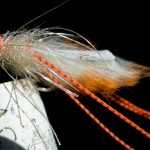
Second Fiddle Crab
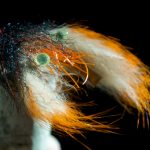
Bug’s Redfish Tickler: Orange & Tan
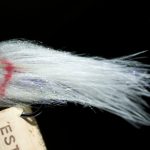
Bruiser Baitfish: Gray & White

Mack ties every saltwater pattern available – for a greater selection of stock patterns offered, visit his fly shop at Southeastern Flyworks. If interested in purchasing any of the referenced flies, pricing is included below.

Pricing

Second Fiddle Crab: $7.00 ea. Purchase Now
Bug’s Redfish Tickler: $7.00 ea. Purchase Now
Bruiser Baitfish: $7.00 ea. Purchase Now

Other Details

If looking for any special fly patterns, please make sure to inquire first. Mack will ship any assortment needed. For specific questions, feel free to connect via his web site Southeastern Flyworks, direct e-mail, or visit his Instagram page.

Shipping

In-stock flies typically ship within 24 hours.

Mack’s Bio

Mack’s passion for fly fishing and tying flies began over 20 years ago in the basement of a friend’s house in Martinsville, VA. A fascination in duplicating a fly/ bug with synthetic materials so accurately was enough to hook him for life – the fact a fish would feed on an authentic replication was simply over-the-top. His pursuit started with bass, bluegill, and trout in the local lakes and rivers, consuming most of his free time. The pond at his family’s farm became his “playground” and testing facility for new creations from the vise. Often trips to Roanoke, VA to spend time with the folks at Blue Ridge Fly Fishers allowed Mack an ongoing environment for learning fly-tying applications. Mack is also a member of the Squimpish Flies Pro Team, fishing all the latest materials for Squimpish R&D. Over the last few years Mack has continued to fish coastlines in FL from Ponte Vedra down to Tampa. To this day he still says his discoveries in fly-tying and fly-fishing never cease to amaze.

Mack spends a considerable amount of time enjoying his passion (Southeastern Flyworks), traveling, and raising his family in GA. Visit Southeastern Flyworks for more of Mack’s fly-tying creativity and fly-fishing lifestyle.

South Florida Fly Shops: Fly-Fishing & Fly-Tying Supplies


Over the last few years I have frequented quite a few South Florida fly shops. I wanted to share my observations on what each shop had to offer. Keeping things simple, I am using Excellent, Good, Fair, and Limited as a scale for rating their available in-store selection. In order from North to South:

[row]
[column size=’1/3′]
Ole Florida Fly Shop
[/column]

[column size=’2/3′]

Ole Florida Fly Shop – Boca Raton, FL

Rod Selection: Excellent
Reel Selection: Excellent
Fly Selection: Excellent
Fly Tying Material Selection: Excellent
Technical Clothing & Gear Selection: Good
Notes: Ask for Daren – exceptional knowledge of our fisheries.
Visit Ole Florida Fly On-Line or map it!
[/column]
[/row]

[row]
[column size=’1/3′]
Mangrove Outfitters
[/column]

[column size=’2/3′]

Mangrove Outfitters – Naples, FL

Rod Selection: Excellent
Reel Selection: Excellent
Fly Selection: Excellent
Fly Tying Material Selection: Excellent
Technical Clothing & Gear Selection: Excellent
Notes: Great selection of bags/ packs – lots of Patagonia travel gear.
Visit Mangrove Outfitters On-Line or map it!
[/column]
[/row]

[row]
[column size=’1/3′]
Bass Pro Shops
[/column]

[column size=’2/3′]

Bass Pro Shops – Dania Beach & Miami, FL

Rod Selection: Excellent
Reel Selection: Excellent
Fly Selection: Fair
Fly Tying Material Selection: Good
Technical Clothing & Gear Selection: Good
Notes: Highest prices among shops reviewed.
Visit Bass Pro On-Line, map Dania Beach, or map Miami!
[/column]
[/row]

[row]
[column size=’1/3′]
Fly Shop of Miami
[/column]

[column size=’2/3′]

Fly Shop of Miami – South Miami, FL

Rod Selection: Good
Reel Selection: Excellent
Fly Selection: Good
Fly Tying Material Selection: Good
Technical Clothing & Gear Selection: Limited
Notes: Ask for David – exceptional knowledge of our fisheries.
Visit Fly Shop of Miami On-Line or map it!
[/column]
[/row]

[row]
[column size=’1/3′]
World Wide Sportsman
[/column]

[column size=’2/3′]

World Wide Sportsman – Islamorada, FL

Rod Selection: Excellent
Reel Selection: Excellent
Fly Selection: Fair
Fly Tying Material Selection: Good
Technical Clothing & Gear Selection: Good
Notes: Store owned by Bass Pro Shops – Highest prices among shops reviewed.
Visit World Wide Sportsman On-Line or map it!
[/column]
[/row]

[row]
[column size=’1/3′]
Florida Keys Outfitters
[/column]

[column size=’2/3′]

Florida Keys Outfitters – Islamorada, FL

Rod Selection: Fair
Reel Selection: Fair
Fly Selection: Good
Fly Tying Material Selection: Fair
Technical Clothing & Gear Selection: Good
Notes: Sizable woman’s clothing section.
Visit Florida Keys Outfitters On-Line or map it!
[/column]
[/row]

[row]
[column size=’1/3′]
The Angling Company
[/column]

[column size=’2/3′]

The Angling Company – Key West, FL

Rod Selection: Good
Reel Selection: Fair
Fly Selection: Good
Fly Tying Material Selection: Fair
Technical Clothing & Gear Selection: Good
Notes: Inventory focuses on more unique fly fishing gear/ apparel.
Visit The Angling Company On-Line or map it!
[/column]
[/row]

[row]
[column size=’1/3′]
The Saltwater Angler
[/column]

[column size=’2/3′]

Saltwater Angler – Key West, FL

Rod Selection: Good
Reel Selection: Good
Fly Selection: Good
Fly Tying Material Selection: Fair
Technical Clothing & Gear Selection: Excellent
Notes: Sizable clothing section, extending past fly fishing.
Visit Saltwater Angler On-Line or map it!
[/column]
[/row]

Columbia’s Silver Ridge Convertible Nylon Pant: Goes Anywhere Perfectly


Never thought you could wear one specific pair of pants in so many environments. I’m so fortunate to have stumbled across Columbia’s Silver Ridge Convertible nylon pant . It’s so easy to get in and out of the water with these, and stay cool. This is the perfect pant for many South Florida conditions – from warm environments and extended sun exposure, to buggy treks through the mangroves, they get the job done and comfortably.

This Columbia pant has a partial elastic band in addition to wide belt loops. The pant comes with a thin-gauge nylon belt and Nifco polyoxymethylene (POM) buckle. Pockets are abundant and are all low profile. These include two front OMNI-WICK pockets, two back OMNI-WICK pockets, one left side (mid-leg) zippered pocket, and one right side (mid-leg) pocket. The convertible option allows for unzipping each pant-leg, offering a solution for shorts.

GREAT FEATURES

KEEP YOU COOL – When it comes to Florida heat and humidity, I look for a pair of these light weight nylon pants. It’s not just the heat and humidity either, I use these for staying out of the sun and for keeping bugs away. They have really become my go-to pant. Not sure how I stay so cool. I simply can’t imagine wearing anything thicker or heavier. Florida is really a place for shorts. If shorts are your thing, then you are also wearing sunscreen or bug juice. I can’t say I am into either of those, however would gladly wear these lightweight nylon pants to solve all the environmental challenges.

UPF 50+ – Columbia has constructed the pant with their UPF 50+ OMNI-SHADE sun protection. Not sure we need to say more on this.

DRY SUPER FAST – Columbia uses their OMNI-WICK fabric for pocket lining and such. This keeps water running off and away from the body. It works pretty well, keeping the air flowing between your skin and the pant material. After coming out of waist deep water on a hot breezy day, I can usually dry out within 45 minutes. If you towel off it’s even faster.

CONVERTIBLE – OPTION FOR SHORTS – This goes without saying. Nothing like removing the pant-leg to increase air flow. Always great to have this option. If you wish to increase air flow slightly in the legs, simply unzip each leg just a bit (maybe 30% or so).

SOFT TO THE TOUCH – I’m sure the lightweight rip-stop nylon has been softened by some process. Can’t put a finger on it, however there is a softness to the material that makes the pant comfortable at any point in the day, or night.

CLASSIC CUT/ STYLE – With relation to style, the pant has an active looking cut, somewhere balanced between sporty and casual. Not too baggy and not too tight. This allows options for dressing it up or keeping things casual.

GREAT COLORS – Columbia offers all the typical shades of grey, blue, and of course black. They also offer all the natural colors, from light creams, tans, and beige to rusts, browns, and greens. The colors are great for blending into the environment (i.e. Bonefish flats, arid deserts, dark forests, etc.). For fishing the flats and all, keep to the light natural colors.

SUPER LIGHT WEIGHT – For most of us in Florida, it’s great to have the option of wearing pants in year-round heat. Some may ask, why pants? More than anything, I think it comes down to keeping out of the sun and away from bugs (mosquitoes). What makes this pant an option is how lightweight they are, offering a way to keep cool in the heat.

EASY TO PACK – It must be the low profile, lightweight, nylon part of these which gives them such a minimal footprint. I think you could roll these up in something resembling the circumference of a French baguette. Perfect to pack for traveling where gear weight becomes a concern.

POSSIBLE IMPROVEMENTS

I suppose I am more of a critic than most – it might simply be my quest to find great gear with a balance of form and function. Following are a few challenges I encountered and how they were addressed.

[row][column size=’2/3′]
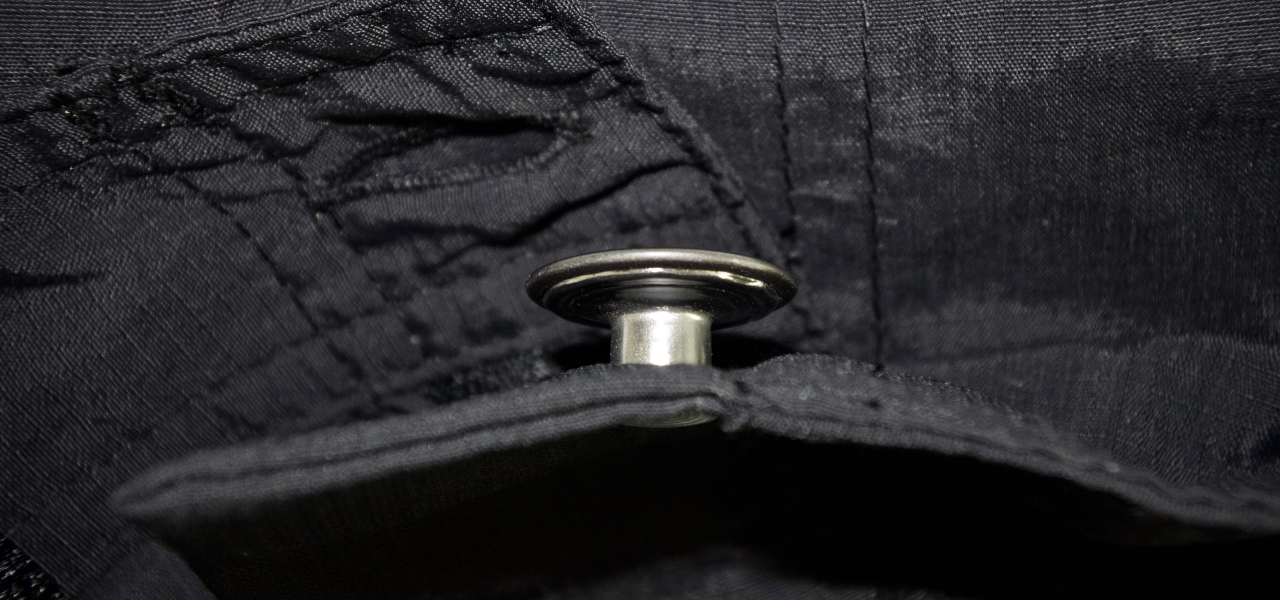
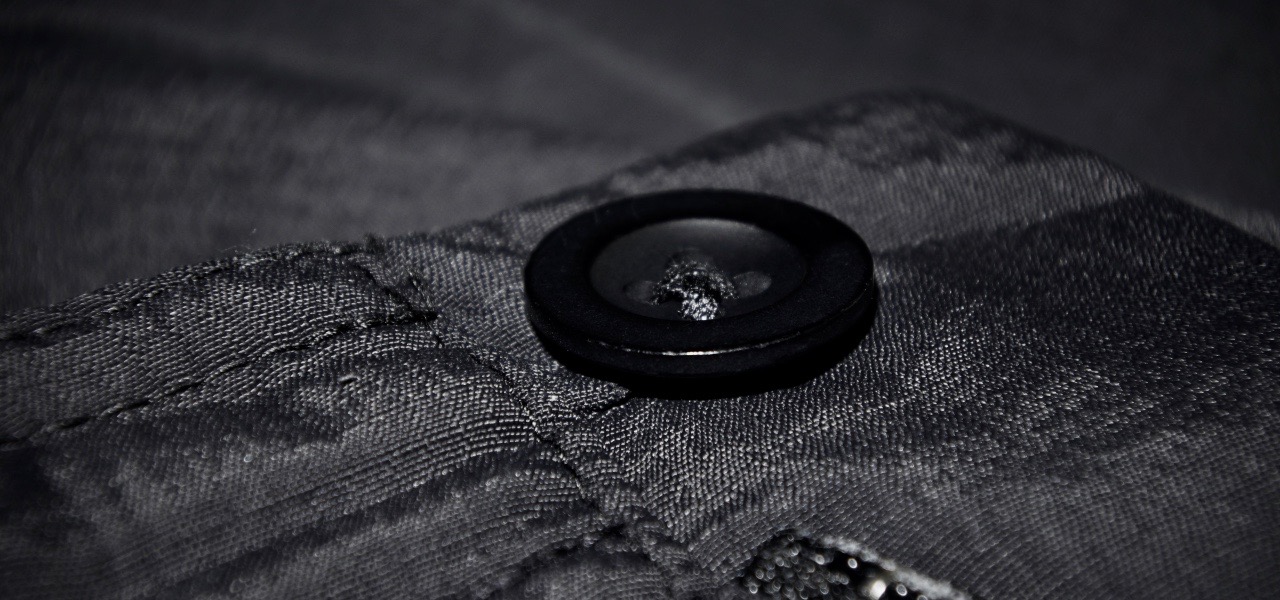
METAL HIGH-PROFILE BUTTON This particular pant comes with a high profile metal button. As the waistline of the pants takes on pressure, both sides of the zipper/ placket slightly pull against each other. This causes the button to twist, thus digging into your waistline. It’s an easy fix – carefully remove the metal button and replace with a 3/4″ button of choice. This will keep the waistline slim and allow it to lay nicely under a belt.

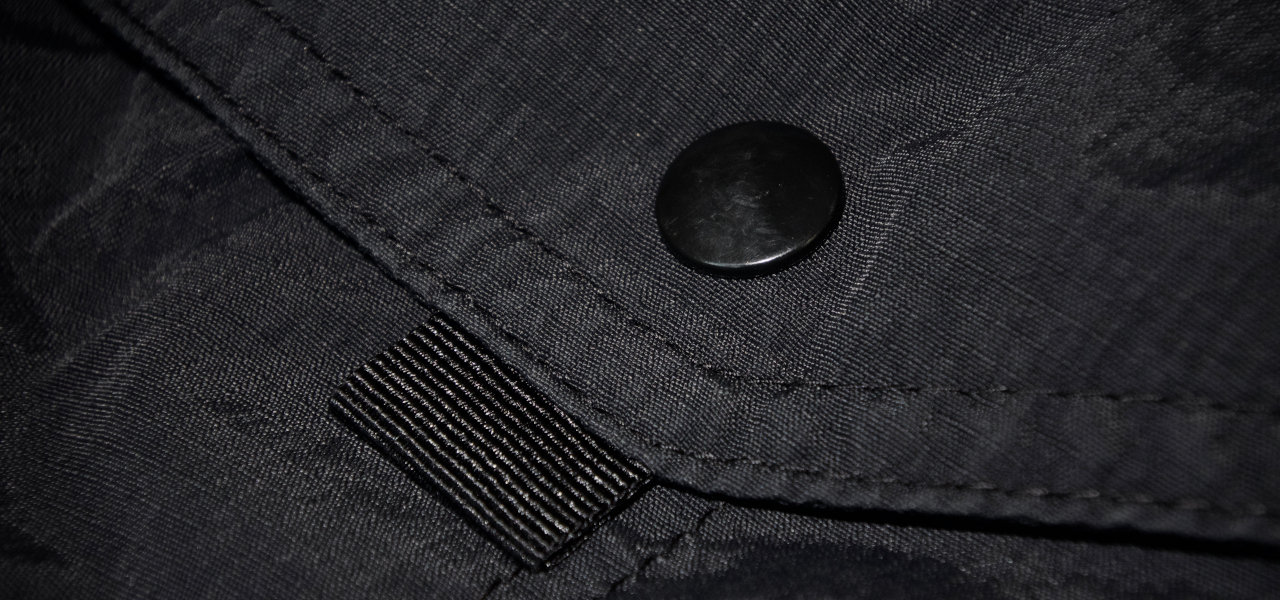
VELCRO FASTENING As most of us know, Velcro (hook-and-loop) fastening can be instrumental when securing gear quickly or in difficult environments. My only challenge comes when the hook-fastener shreds the material the loop-fastener is attached to. I will usually seam-rip (remove) the Velco and replace it with KAM snaps in some matching color. KAM snaps are made of polyoxymethylene (POM), are lightweight, and low profile. KAM snaps keep the surrounding material from deteriorating.

LIGHTLY STITCHED BACK POCKETS I found the stitching that secured both back pockets quickly wore away. I am sure siting on the boat, beach, rocks, benches, etc. had something to do with it. This is what pants are for, no? I reinforced my pockets with a slightly tougher thread.
[/column]

[column size=’1/3′]
Columbia Silver Ridge Convertible Nylon Pant:  Button Issue
Button Issue

Columbia Silver Ridge Convertible Nylon Pant:  Button Solution
Button Solution

Columbia Silver Ridge Convertible Nylon Pant:  Velcro Solution
Velcro Solution (KAM Snap)
[/column][/row]

OTHER NOTABLES

The elastic band is challenged if you carry any weight in the pockets or simply get the pants wet. I’m sure the stock belt functions fair enough, however I use Patagonia’s nylon friction belt . Had it for years and works amazingly well.

Just a reminder for everyone, nylon melts. Keep away from anything burning (i.e. a flame, sparks, embers, etc.). Nylon will easily melt and stick to anything it’s touching.

MSRP for this pant has always been $60 USD, however on occasion you may find it for less on Amazon .

I currently have four pair of these and absolutely love how functional they are across the board. A cool, lightweight, fast drying, easy-to-pack pant that offers sun/ bug protection to boot, how much better can it get?

If you have any questions or comments, please feel free to comment below and share.

Flies by Backwater Fly Fishing


Capt Jesse Males connected with us at Fly Mastery back in JAN 2016. After some time exchanging e-mails and photos, it was apparent he also had a passion for fly-fishing, fly-tying, and the adventure that comes with the fly-fishing lifestyle. Over the last two months I received amazing photography of custom fly patterns and some video of various international fly-fishing travel. Not only were the photos well done, but the videos were outstanding. Each video had great fly-fishing action and great perspective. Video soundtracks were well done and the editing first rate. I could tell Jesse had a knack for inspiring others to fly-fish when his videos all seemed to tell a story. Some would include packing up, traveling, arriving, gearing up, sighting hot spots, striking, fighting, landing, releasing fish, cooking fish, and chill’n under the coconut palms remembering the day’s fun.

Needless to say, we are honored Capt Jesse chose Fly Mastery to help share his great fly-fishing and fly-tying creativity. Enjoy some of his great fly patterns below and look for more to come.

  • Redfish L&D (Lunch and Dinner)
  • Backwater Tarpon Toad: Chartreuse
  • Ostrich Clouser Minnow: Olive
  • Margarita Shrimp
  • Simple Micro Shrimp: Olive
  • Ostrich Clouser Minnow: Midnight
  • Crystal River Shrimp
  • Flash Fur Baitfish: Gold
  • Tarantula Shrimp: Olive
  • Poppin Flats Shrimp: Brown

Capt Jesse ties every saltwater pattern available – for a greater selection of stock patterns offered, visit his fly shop at Backwater Flies. If interested in purchasing any of the referenced flies, pricing is included below.

Pricing

Ostrich Clouser Minnows: $15.00 for three. Purchase Now
Redfish L&D: $20.00 for three. Purchase Now
Simple Micro Shrimp: $11.00 for three. e-mail Capt Jesse to special order
Crystal River Shrimp: $16.00 for three. e-mail Capt Jesse to special order
Flash Fur Baitfish: $21.00 for three. Purchase Now
Tarantula Shrimp: $19.00 for three. e-mail Capt Jesse to special order
Poppin Flats Shrimp: $22.00 for three. Purchase Now

Other Details

Jesse ties a majority of his saltwater flies with Gamakatsu and Mustad hooks. He’s currently experimenting with Daiichi 2546 hooks – if a fan of Daiichi, request for them specifically. If looking for any special fly patterns, please make sure to inquire first. He will ship any assortment needed. For specific questions, feel free to connect with Jesse via Facebook, YouTube, his web site Backwater Fly Fishing, or his e-mail.

Shipping

First Class USPS shipping is $6.00 and all orders over $50.00 ship free of charge. Orders typically ship inside of one week.

Jesse’s Bio

Captain Jesse Males, an aficionado in the world of fly-fishing. A sportsman, adventurer, and outdoorsman – it’s difficult to categorize his expertise or identify waters he hasn’t fished.

Captain Jesse started fishing at a very young age and was taught to fly-cast by his father at ten years old. This opened up a whole new aspect of fishing and provided him a stack of amazing memories. It wasn’t until Jesse hit college where he spent a majority of his time on the water. Time was mostly spent in pursuit of learning the backwaters that make up both East and West coasts of Central Florida. This included waters between Chassahowitzka and Crystal River on the West coast, as well as waters of the Banana River, Indian River, and Mosquito Lagoon systems. Most exploration in fly-fishing was done via kayak. Nothing gave him more of a challenge or reward than sneaking up on monster fish in the yak and landing a fly within reach.

This fly-fishing lifestyle has taken Jesse to some great destinations and provided him with memorable experiences in the wild. From chasing big salty critters in the Florida Keys, Roosters in Coast Rica, and Trout in the Carolinas and Wyoming, he’s felt blessed to experience fly-fishing at its finest.

Capt Jesse spends a considerable amount of time growing his business (Backwater Fly Fishing and Backwater Flies), traveling, and raising his family in Central Florida. Visit Backwater Fly Fishing for more of Jesse’s fly-tying creativity and fly-fishing lifestyle.


Flies by John Roetman


I first connected with John Roetman at the 2015 IFFF Expo in Fort Lauderdale, FL. He had quite a few folks gathered around his fly-tying bench, all of which were very interested in his display of unique creations. After some time watching John tie one of his latest local patterns, it was apparent he had years of experience at a vise – that and a knack for demonstrating how to move through the design and tying process. Needless to say, we were thrilled to have him send us a few flies (below) to post on Fly Mastery. We anticipate sharing more of John’s creations in the next few months.

  • Dock Lite Special: Blue
  • Gartside’s Fish Head (variation): White
  • Gartside’s Fish Head (variation): Black
  • Mini Finger Mullet: Olive
  • Mackerel Madness: Chartreuse
  • Lenny’s Betty Boop: Black
  • Lenny’s Betty Boop: White

John ties most saltwater patterns and would be willing to sell a few by request. If interested in purchasing any of the referenced flies, pricing is included below.

Pricing

Fish Heads: $3.50
Dock Lite Special: $3.00
Mackerel Madness: $2.50
Mini Finger Mullet: $2.50
Lenny’s Betty Boop: $3.95

Other Details

John ties a majority of his saltwater flies with Orvis SI9034 and Mustad C70SD Big Game hooks. If looking for something special, please make sure to inquire first. He will ship any assortment needed.

Shipping

Please connect with John for pricing on shipping. Orders typically ship inside of one week. For specific questions, feel free to connect with John via e-mail.

John’s Bio

John Roetman is a well known fly-tying and fly-fishing authority here in South Florida. After retiring in 2010 and moving to Hobe Sound, John spends a majority of his time fishing the Treasure Coast. He covers a majority of the ICW, from the Mangroves to the surf. John has been fly-tying and fly-fishing for over 50 years now. He’s always worked in the fishing business, managing and buying for Ramsey Outdoor and Orvis, both in Northeast NJ. John is a lifetime member of Trout Unlimited, CCA Florida, and IFFF. Quite often you’ll find him at various fly-fishing expos throughout the year, demonstrating his tying talent and offering a look at his latest designs/ creations. John has not only fished a majority of the waters here in the US, but those abroad, including many in Canada, New Zealand, Chile, Argentina, Belize, Mexico, and the Bahamas.

Rubber Legs: New Color Options


I was leaving one of the Bass Pro Shops the other day and happen to walk out through the isle displaying all the rubber/ plastic lures. Among all the eye-candy, the replacement rubber “skirts” for spinners and jigs caught my eye. They looked so similar to the Sili and Centipede legs we all buy for tying our flies, but yet in better color options. There were several ways this discovery paid off:

1) These lure skirts are simply rubber legs loosely banded together – cutting the binding band separates all the legs, perfectly cut and ready to tie into any fly pattern.

2) The variety of colors are great! For some reason the coloring is much more creative than what’s typically offered in the fly-tying section of the store, or even on-line.

3) Each pack of skirts seem to include three (3) different colors. At least I found the Fishing Skirts brand did.

4) Each pack of skirts (legs) is competitively priced with other rubber leg manufacturers, however I believe you actually get more legs.

The colors are the best part of the discovery. The metallic flake used is more like a metallic powder, perfectly applied to give just the right effect. As I’m looking to tie a few more crab patterns, I picked up a pack of Carolina Craw and Army Blue Bars. After separating the colors, I can see I made the right choice. One has a great shimmer of chartreuse, some black barring, on a slightly translucent olive leg (pictured) and the other a sky-blue shimmer, some black speckling, on a slightly translucent olive leg. Both colors will work perfectly for tying crab patterns for South Florida.

Take some time to look through the colors, in person – they’re all so vibrant. If you’re like me, it will take a while to figure out how many sets of colors you want to work with – they’re all so great. Check Amazon for their sizable collection too.

If you have additional ideas on where to find new colors or new types of legs, please share below in the comment section. We would very much appreciate the input!

Salty River Fly Company


Last month I noticed a few creative fly patterns on Instagram by Salty River Fly Company – one being their Mayan Cichlid Clouser. After connecting with Jesus Mora (Owner) via e-mail, he decided to send me a few fly patterns to post on Fly Mastery. Patterns included:

  • Brush Crab
  • Redfish Toad: Purple
  • Peacock Baitfish Fry
  • Lion Shrimp: Olive
  • Mayan Cichlid Clouser
  • Origami Shrimp
  • Peacock Clouser
  • Mayan Cichlid

Jesus will tie anything you could dream up. He can replicate/ tie just about anything that swims, hops, walks, or flies. If interested in purchasing any of the referenced flies or others included on any of his sites, pricing is included below.

Pricing

Crystal Minnows: $3.00
Gotchas: $3.00
Clousers (basic): $3.00
Poppers: $4.00
Clousers (deluxe): $5.00
Gurglers: $5.00
Tantrums: $5.00
Toads (Redfish): $5.00
Sea Ducers: $5.50
Toads (Tarpon): $6.00
Crabs: $6.00
EP (deluxe): $6.50

Other Details

Jesus ties flies with an assortment of hooks. If looking for something special, please make sure to inquire first. He will ship any assortment needed.

Shipping

Orders under $50: Shipping is $6.00 (USPS Flat-Rate 3 Day)
Orders $50 and over: Shipping is FREE (USPS Flat-Rate 3 Day)

Orders typically ship inside of one week. For specific questions, feel free to connect with Jesus via Twitter or e-mail.

Jesus’ Bio

Jesus was raised fishing the DC, Maryland, and Virginia (Chesapeake Bay) part of the Northeast. Back and forth between the Northeast and Florida, he spent quite a few years in various fisheries. These days, Jesus spends the majority of his time fly-fishing the Gulf side of Florida, including a good portion of the Everglades and 10,000 Islands. A majority of his fly-fishing is done on foot, wading with alligators and the occasional python. He says it’s all about accessing the “honey holes” back in the Everglades.

If it wasn’t for accidentally flipping his kayak and dumping his custom spinning rig (Van Staal VS150 and custom rod) into the drink, he may have never been introduced to fly-fishing. From that day forward, Jesus has exclusively fly-fished. Jesus shared some good times spent on the water catching his 44 inch Snook, huge Black Drum, Redfish, Tarpon, and many other species.

His passion for fly-fishing didn’t stop there – he jumped into fly-tying wholeheartedly. Today, fly-tying offers a perfect channel for his creativity and entrepreneurial spirit. Jesus recently created the Salty River Fly Company web site and is looking forward to its speedy growth and expanded inventory of fly patterns.

Columbia’s Backcast Nylon Pant: 5-Star Performer


In South Florida, it can get pretty warm (90°F with 90% humidity) in the Summer months. One of the best ways to steer clear of the sun and stay cool is to wear a lightweight pair of UPF nylon pants. Many manufacturers (i.e. Patagonia, Simms, ExOfficio, etc.) offer UPF pants in polyester and nylon, however Columbia’s PFG Backcast Pant initially felt most comfortable and cool. One of the most appealing features of the pant is its super lightweight nylon. The pant also comes with a UPF rating of 50.

The Backcast nylon pant has an elastic waist band and poly draw-string for closure. I can’t say the small gauge draw-string could do much when the pants get wet, however I’m not going to wait and see. Great part of their design however is the fact they also come with belt loops. I always use a nylon Patagonia belt when out in the water. The belt not only works to keep wet pants up and secure, but also holds various fly-fishing tools (i.e. retractors, nippers, rag, etc.). This particular belt works nicely with the Backcast pant. In the beginning I had some discomfort, as the belt was pressing the draw-string into my hip bone. After I figured out the issue, I removed the draw-string indefinitely. If you want to try wearing the pants with a belt (without the drawstring), but think you may use the drawstring at a later time, here’s a tip: When pulling out the poly draw-string, tie a very thin nylon thread (sail thread) to it and pull it through. Secure the nylon thread to itself, so it won’t pull out when the pants are being used. This thread can be used to pull back in any other draw-string you wish to use at a later date.

Pockets are great as well! Both side pockets have wide openings. Columbia offers only one back pocket (right side) – this pocket has a zipper as seen in the image above. An additional vertical utility pocket is located adjacent to the right-hand pocket along the outside seam.

An inside poly mesh lining comes with this pant. The mesh is a huge contributor to drying out and keeping cool. When it comes to increased air flow or allowing sand to fall away, the mesh really adds to the pant’s functionality.

Surf Fishing

Light weight nylon pants work very well when in the surf. When fly-fishing in the surf, waves hitting your legs will often throw sand up into your shorts, making your walk home a little more uncomfortable. Great thing about wearing pants out in the surf is the fact you’re more protected.

Yak fishing

Columbia’s PFG Backcast Pant is perfect for kayaking, especially when your legs end up 90 degrees to the sun’s rays. Best you have boots, booties, or high-tops however, as the pants will come up a bit (exposing your ankles to the sun) when sitting/ paddling.

Colors & Sizes

Columbia’s PFG Backcast Pant comes in three colors: Fossil, Cypress, and Grill. In addition, the pants come in sizes ranging from Small to XX-Large with in-seams of 30, 32, and 34. For more information from Columbia, visit their PFG Backcast Pant web page.

Finding a Pair

Most fishing stores and retailers offering outdoor gear will have Columbia. West Marine and Bass Pro Shops will offer a sizable selection of Columbia gear. This particular pant is priced at $30 at most retailers and can be found on Amazon sometimes for $24!

Columbia also makes the PFG Backcast Pant in a “convertible” option. Meaning, you have the option to zip off the lower half of each leg to offer you instant shorts. Amazon also offers this convertible pant for a reasonable price.

If you have a great UPF pant solution – by all means, share it with us! Fly Mastery readers are always interested in improving their gear and its functionality…

Saltwater Fly-fishing Gear: Editor’s Choice


When it comes to purchasing fly-fishing gear (i.e. rods, reels, line, etc.), there are so many models and brands to choose from. Technology advances exponentially each year, bringing better and better equipment to the table. It is true my G3 Sage rod from 1990 still holds its own, however it seems like new rods have this extra sense of something – making them super sensitive, but yet more powerful. Reels have also evolved by leaps and bounds. Reels have become thinner in width and larger in circumference, giving better leverage on the retrieve. Designers have realized there is an excess of aluminum in reels and have since removed all but a skeleton structure to hold/ retrieve line. A byproduct of this creates great air flow around the spool, allowing the line to dry more quickly. Drag systems are now fully sealed, keeping sensitive drag components free of corrosion and grime. Exciting stuff really…

I get asked quite often what my “go-to rig” includes. As I answer most questions with a post, I figured I would add a little more than simply what gear I choose to fish. I have a Sage/ Galvan 3-weight for packing high altitude, a Sage/ Hardy 6-weight for all freshwater, and a Sage/ Galvan 9-weight for all Saltwater applications. As this post is focused on saltwater, I’ll continue with my 9-weight rig.

Before designing or choosing a rig, it’s important to focus on a target fishery or an environment and set of species to fish. One fly-fishing rig won’t do it all, but it’s possible to get one rig to cover a lot of ground. In my case, I wanted my first rig to handle Bonefish, Permit, Snook, Redfish, small Tarpon, Barracuda, and the occasional Jacks, Dolphin (Mahi), Shark, etc. As the 8-weight rods are built more for the Bonefish, Jacks, Sea Trout, small Snook, and small Reds, I stepped up in rod weight. As 10-weight rods are built more for Permit, Tarpon, Barracuda, and the like, I figured I would step down a bit. I felt like a 9-weight would handle a little of everything. Reels quite often are designed for multiple line-weights. I ultimately chose a reel that would work for 9 and 10-weight rods/ lines.

Rods

In 1990, I stopped using free/ borrowed stuff and purchased my first rod/ reel. I purchased a Sage 590-2 LL G3, a 5-weight Light Line Graphite rod perfect for Western river fishing. I broke a tip here are there and Sage always sent me a new one for $20. Needless to say, Sage not only has a nice product, but also a solid life-time warranty service. From the 1990s forward, G Loomis has always been a major player in manufacturing solid fly-rods. G Loomis (Gary) now lends any new technology improvements and innovation to Temple Fork Outfitters (TFO). TFO has the best bang-for-the-buck rod hands down. Their BVK rods always sits at the top of the lists in expert reviews.

I currently fish with a Sage One, 990-4. It’s relatively light weight, feels like it has a lighter swing-weight, and still seems to offer me the distance and control I want in a rod. Two other rods which interest me at this time are the TFO BVK 9-weight 4-piece and the G Loomis NRX 1089-4 G. Some friends and numerous experts in the field say great things about both rods. I haven’t been able to get out and use either of them, however they most likely would be a second and third choice at this time.

Reels

As mentioned earlier, in 1990, I stopped using free/ borrowed stuff and purchased my first rod/ reel. I purchased a Sage 505L (manufactured by Hardy), a 5-weight reel specifically designed for light line applications. I loved this click-pawl reel in so many ways. The reel worked flawlessly and was tough as nails. As Hardy manufactured the reel for Sage, I credit Hardy with the grade of materials and craftsmanship. I still appreciate Hardy reels and keep a close eye on the Ultralite SDS line. In 1999, I purchased a Galvan OB-1, a 3-weight reel I paired with a 3-weight 7′-0″ packing rod. I was so impressed with how the reel worked for me, I chose to stay with Galvan when purchasing my saltwater set-up. I did look at Lampson, Redington, Sage, Ross, Nautilus, Tibor, Einarsson, Hatch, Taylor, and others, however loved the minimalist design, air flow, functionality, and price point of the Galvan Torque series. I find it interesting how other reel manufacturers are now coming up with similar minimalist designs. More manufacturers are realizing you can keep a reel structurally sound and have it perform well with mush less material. Wright/ McGill and Taylor are now using much less material in their reels. Einarsson (manufactured in Iceland) looks like they are building a great product with much less material as well.

I currently fish with a Galvan T-10 and really like how it performs. Second and third choice reels for me would be the Einarsson Invictus 10 and Taylor Revolution 10, respectively. Both Galvan and Taylor reels offer a bang-for-the-buck value – Einarsson may be considered pricey by most.

Lines

Before purchasing my first saltwater fly-line, I wasn’t able to shoot as much of the heavy line as I wanted. I wanted more hands-on time – time to feel more of the line characteristics and differences before having to commit to purchasing one line. After debating lines made by Airflow, Rio, Scientific Anglers, Royal Wulff, Cortland, and others, I settled on Rio’s Bonefish Quickshooter. Considering advice from numerous expert sources, one common denominator emerged – to use a weight-forward (WF) line with no more than a 35′ tapered head. This puts more of the mass out in the air and gives someone new an easier start with heavier lines. Quite a few lines offer 40′ and 45′ heads, however only one or two manufacturers offered the shorter more compact head. Rio offered two colors in this line, Aqua-Blue/ Sand and a Orange/ Sand. When beginning to fish saltwater, it is nice to have a high-vis line – makes it very easy to identify in air and in the water. Keep in mind, if it’s easier for you to identify your line, it’s easier for fish to identify it as well. Now after some time out on the water and knowing how heavier lines behave in this environment, I think I could appreciate a stealthier line. In retrospect, the Aqua-Blue/ Sand color option looks more appealing now. Keep in mind some manufactures make completely clear fly-lines while others make simply clear heads. For the experienced, a clear fly-line would be the ticket.

I currently fish with Rio’s Bonefish Quickshooter WF9F in Orange/ Sand. As mentioned earlier, the bright head is nice, however I find myself using longer leaders to sneak up on fish in skinny water.

Leader/ Tippet

There are several schools of thought when strategizing on how to build leaders. Some swear monofilament should be used to build the majority of leader, leaving fluorocarbon for the tippet only. Some say it’s more important to pay close attention to the “size” of your leader material, stepping it down in sections to allow for better transfer of line energy. Well, after some trial and error, I tend to agree with the later. Some argue the mono is more forgiving (better movement) vs. the fluoro being too stiff. I think the aerodynamics and mass of the line play a more important role.

Whether you believe in a mono or fluoro leader, the goal is the same when stepping down in size to the tippet. I begin with the diameter size at the end of my fly-line and slowly step it down (in diameter and strength) from there. I start with a 2′ butt-section 50#, a few feet of 40#, a few feet of 30#, and a fluoro tippet of 20# (or 16#, or 12#), depending on you’re requirement or target fish. If two connecting sections of leader differ in diameter too greatly, you may get “line-stacking” when casting. In other words, your fly-line and some of your leader may cast nicely, leaving your tippet to stack up in a coil on the water. Graduating your leader sections based on diameter should be heavily considered.

I carry three bracelet-coils of Berkley, Vanish, Fluorocarbon, Clear (50#, 40#, 30#) for leader material and two smaller spools of 20# and 15# for tippet material. The tippet material is always carried in my waist-pack when on or off the boat. Oh yes, one other consideration – always carry at least three (3) ready-to-go tapered fluorocarbon leaders in your waist pack. It is inevitable you will be a mile from the boat (or car) when the coral rips your leader in two. Carry these as a contingency. I carry three Rio Saltwater Fluoroflex Tapered Leaders in my waist pack.

Summary

[list]
[list_item]Rod: Sage One 990-4[/list_item]
[list_item]Reel: Galvan T-10[/list_item]
[list_item]Fly-Line: Rio Bonefish Quickshooter WF9F[/list_item]
[list_item]Backing: PowerPro, Braided, White, 30#[/list_item]
[list_item]Leader: Berkley, Vanish, Fluorocarbon (50#, 40#, 30#)[/list_item]
[list_item]Tippet: Berkley, Vanish, Fluorocarbon (20#, 15#)[/list_item]
[/list]

Tell us about your saltwater “go-to” rig in the comment section below. Fly Mastery readers appreciate the outside perspective, especially when investing in similar gear…

Obtaining a USCG Captain’s License


Over this past year, I have been asked several times what is involved with obtaining a US Coast Guard (USCG) Captain’s License. After some formal fact-finding and the recollection of my own experiences, I will share some of the basic requirements and offer additional tips on the process.

The USCG offers a series of Merchant Mariner Credentials (licenses), all of which vary in functionality. A basic license is available to legally “guide” paying customers (up to six) on a USCG uninspected fishing charter or sunset tour all the way to complex licensing for USCG Inspected ocean liners carrying thousands of paying customers. A potential licensee would typically obtain one of the initial and basic licenses first. Over time, any additional experience on larger and more complex vessels offers the ability to upgrade to a license having greater capacity (higher gross tonnage or special functionality).

For intents and purposes, most who wish to “guide” in the fly-fishing business will require a USCG Operator of Uninspected Passenger Vessel (OUPV) Six-Pack License. Note: There is no requirement to obtain this license first however – if you have prior experience (sea time) on larger/ applicable vessels, you may obtain your Master or Mate Inland or Near Coastal 100 Ton License initially. I took this path myself.

Qualifying Sea Time for Licenses

All credentials below can be obtained through your initial application. Your credential will depend on your sea service relating to the size of vessels served on and the location of waters where under way.

USCG Operator’s License (6-Pack)

Uninspected vessels (6 paying passengers) up to 100 GT on up to 100 miles off-shore:

At least 360 days of boating experience including 90 days off-shore and 90 within the past three (3) years. If you do not have coast-wise experience, you can get an Inland license. Non US Citizens may be restricted to undocumented vessels with a 5 net ton limit.

USCG Master Inland/ Mate Near Coastal

Inspected or Uninspected vessels up to 100 GT on Inland Waters:

At least 360 days of boating experience including 90 within the past three (3) years. If you have 180 days of off-shore experience, you can also get Mate Near Coastal (200 miles) license. If you only have 90 days of off-shore time, you can also get OUPV Near Coastal. If you do not have any near-coastal sea service, apply for a Master Inland. If all sea time is under 5 GT you will get 25 GT. If 90 days is over 5 GT, you will get 50 GT license. If 180 are over 34 GT, you will get 100 GT license.

USCG Master Near Coastal

Inspected or Uninspected vessels up to 100 GT on up to 200 miles off-shore:

At least 720 days of boating experience including 360 days off-shore and 90 within past three (3) years. If all sea time is under 5 GT you will get 25 GT license. If 180 days is over 5 GT, you will get 50 GT license. If 360 is over 34 GT, you will get 100 GT license.

Required Documentation

There is a stack of documentation required to apply for this Merchant Mariner Credential (MMC). Before detailing documentation, here’s a list of basic requirements in simple form:

  • Merchant Mariner Credential Application (Form CG-719B)
  • Small Vessel Sea Service (Form CG-719S)
  • Medical Evaluation Report (Form CG-719K)
  • Periodic Drug Testing (Form CG-719P)
  • US Passport
  • Transportation Worker Identification Credential (TWIC)
  • (3) Character References (notarized)
  • Merchant Mariner Oath (notarized)
  • CPR Certification
  • Maritime Training Certification
  • USCG Merchant Mariner Evaluation User Fee

Some may have challenges with obtaining enough sea time to apply right away – others may be challenged with obtaining a US Passport. One thing is for sure, don’t underestimate the amount of time it will take to study and pass the USCG Merchant Mariner Exams. More on this below in the Maritime Training Certification section…

Merchant Mariner Credential Application (Form CG-719B)

This form is straight forward with the exception of Section II. I strongly suggest you talk to someone who fills these forms out for a living. I originally prepared all of my documentation (without advice) and e-mailed it directly to the USCG. To my surprise, I correctly completed all documentation the first go-round. This does not happen to often for most. I was fortunate enough to speak with Ann Aylesworth, the Admissions Manager of Maritime Professional Training (MPT) in Fort Lauderdale, in time to amend my application before printing. Ann not only helped qualify what license I should be applying for, but also helped with understanding how I could upgrade to a greater license without additional schooling or fees. She also will have you optimize Section II of the application to add other important inclusions and endorsements which apply to your experience and mariner education. See the Maritime Training Certification section below for additional information.

Small Vessel Sea Service (Form CG-719S)

A Small Vessel Sea Service form will be used for all sea service requested on vessels under 200 gross tons. Owners of vessels may attest to their own service; however, those who do not own a vessel must obtain evidence from licensed personnel or the Owner of the vessels listed. The documentary evidence produced by the applicant must contain the amount and nature of the applicant’s experience, vessel name, gross tonnage, shaft horsepower, official registration numbers, routes upon which the experience was acquired, and approximate dates of service. It can be difficult recounting for time spent under way, especially when reaching a few years back. Keep in mind, most will have less time on the water in Winter months, during school months, etc. Your estimated time under way should reflect this. Remember, a day’s credit can only be given if time under way is greater than four (4) hours. I suggest building a spreadsheet of all hours you intend to claim. You will definitely want a record of this.

Medical Evaluation Report (Form CG-719K)

This is a general medical evaluation and can take very little time. I filled out the CG-719K form with all pertinent info and visited my GP for additional assessment and signature. I brought with me some results from a free Costco hearing test – he added the records to my file. The CG-719K form will disclose your:

  • Current Medications
  • Medical Conditions
  • Visual Acuity
  • Hearing
  • Physical Information
  • Demonstration of Physical Ability
  • Medical Practitioner Recommendations

Drug Testing (Form CG-719P)

This requirement simply includes a one-page form you will give to the drug testing facility (administration) to have completed by a registered physician upon reporting your results. Always double check the form to make sure the form is properly completed with all applicable signatures/ information. For those who may pay cash, this test typically ranges from $30 to $60 in most locations.

Proof of US Citizenship

Proof of US Citizenship (Birth Certificate or Passport) will be required for Master/ Mate credentials. Proof of Permanent Residency will be required for the OUPV Six-Pack credential.

Transportation Worker Identification Credential (TWIC)

The US Transportation Security Administration (TSA) issues a Transportation Worker Identification Credential (TWIC) to all USCG credentialed merchant mariners and maritime workers requiring unescorted access to secure areas of port facilities, outer continental shelf facilities, and vessels regulated under the Maritime Transportation Security Act (MTSA) of 2002. Applying for this credential should be done ASAP in the licensing process, as the appointment to process a TWIC and the waiting period to receive it can be lengthy. TWIC processing fees were $130 in my case. A TWIC is valid for five (5) years.

(3) Character References (notarized)

This requirement should be considered low-hanging fruit. Character Reference letters are relatively simple in nature and attest to the licensee’s character as a responsible and upstanding citizen. Letters should suggest the licensee holds a capacity to be a professional officer and is personally endorsed to have a Merchant Mariner Credential.

Merchant Mariner Oath (notarized)

The oath is also an easy requirement to complete. You may download a template of the form suitable for notarizing on your own, or save the $20 notary fee and use the oath taken in your mariner’s training course at Maritime Professional Training (MPT). MPT will notarize the oath for your MMC application submittal package.

CPR Certification

Many have already taken CPR courses for work or other service oriented disciplines. If you wish to register and take this course on your own, make sure the USCG will accept the course content/ certificate. I took my course through the American Red Cross, as they are a USCG approved provider. If you go with an American Red Cross first-aid course, it needs to include the mandatory training (i.e. Adult First-Aid, CPR, and AED). I believe the certificate issued is valid for two (2) years. Some maritime training programs may bundle courses, offering cost effective rates – inquire at the least.

Maritime Training Certification

After quite a bit of research, I decided to use Maritime Professional Training (MPT) for my “sea school” training. MPT came highly recommended by random professionals in the business and happened to be close by in Fort Lauderdale. Quite a few training organizations offer coursework, but not in-house USCG approved exams (with passing guarantees). I had two students in my specific class who indicated their prior training program didn’t optimize their application and curriculum to take advantage of a more encompassing license. Needless to say, I was impressed with how much knowledge the administration office had to offer. During my Master 100 Ton course, the Administration Manager made a point to coach the class on the ins-and-outs of the application process. I was amazed at how many questions came up. None the less, MPT offered complementary training/ testing for MMC Endorsements (Assistance Towing and Auxiliary Sailing) for those who requested them. My Course instructor was Capt Chris Chavez. He carried a fast paced, relaxed, and entertaining 11 day course offering his extensive maritime knowledge and sense of instructional leadership. We spent eight (8) hours of time in class each day and had four (4) hours of homework each night. Capt Chris suggested students memorize “Rules of the Road” information and review a selection of example exam questions nightly. MPT has a recipe for getting students to pass the USCG exams the first time. My advice? Follow MPT course management suggestions very closely. Passing USCG exams becomes effortless.

USCG Merchant Mariner Evaluation User Fee

Evaluation fees are simply processing fees. The Evaluation fee is $100 and the Issuance fee is $45. This $145 payment will be processed by Pay.gov.

Other Considerations

Today’s USCG MMC application process takes advantage of current technology – they allow correspondence in e-mail and the transfer of digital documentation. This is a huge advantage when you think of all the copies, envelopes, certified mailings, post office delays, and other potential hurdles you could encounter. Follow the MMC e-mailing instructions so your application moves through the process efficiently. Keep in mind e-mail submittals are sent to a formal address given in the MMC instructions. A subcontracted organization has been helping the USCG National Maritime Center deal with the application process for some time – they are formally known as Advanced Government Solutions (AGS). If you have any follow-up questions or requests for status, e-mail AGS. Their response time averages about three (3) working days.

Important – Some may think of the USCG as a highly regulated unwavering entity with impeccable accuracy and consistency. Unfortunately, this is not the case. They too are comprised of people who work diligently processing high volumes of paperwork and push their productivity as they see fit. Do yourself a favor, keep your originals/ records in a secure place, safe from fire and flood. There are documented instances where the USCG archives have been obliterated by hurricanes and other natural disasters. The USCG reserves the right to request your documentation to replace/ update their files. If you lose your original documentation/ records, you may in fact lose your license. Do not rely on the USCG to maintain your credentials. This is the case even when moving through the application process. I was asked twice, after my original submittal, to resubmit the signature page of my application – they indicated they lost it. Strange though, I submitted it via e-mail in one PDF (digital document). In other words, they would have been missing the whole document, not just the last page. None the less, maintain your own files!

Disclosure Regarding Liability – The above information is offered to help prospective licensees “pre-qualify” their potential for becoming a USCG Captain and better understand the credentialing process. The above is abbreviated information found on the USCG’s National Maritime Center‘s web site and Maritime Professional Training‘s web site. Those deciding to pursue a USCG Captain’s License should use both sites and the associated professionals to obtain current and detailed information for licensing.

If you have personal experience with licensing or any details/ advice which would help others steer clear of additional challenges, please feel free to share!
USCG National Maritime Center