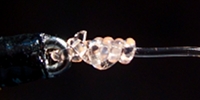
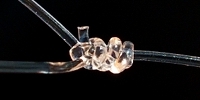
South Florida Fly Shops: Fly-Fishing & Fly-Tying Supplies


Over the last few years I have frequented quite a few South Florida fly shops. I wanted to share my observations on what each shop had to offer. Keeping things simple, I am using Excellent, Good, Fair, and Limited as a scale for rating their available in-store selection. In order from North to South:

[row]
[column size=’1/3′]
Ole Florida Fly Shop
[/column]

[column size=’2/3′]

Ole Florida Fly Shop – Boca Raton, FL

Rod Selection: Excellent
Reel Selection: Excellent
Fly Selection: Excellent
Fly Tying Material Selection: Excellent
Technical Clothing & Gear Selection: Good
Notes: Ask for Daren – exceptional knowledge of our fisheries.
Visit Ole Florida Fly On-Line or map it!
[/column]
[/row]

[row]
[column size=’1/3′]
Mangrove Outfitters
[/column]

[column size=’2/3′]

Mangrove Outfitters – Naples, FL

Rod Selection: Excellent
Reel Selection: Excellent
Fly Selection: Excellent
Fly Tying Material Selection: Excellent
Technical Clothing & Gear Selection: Excellent
Notes: Great selection of bags/ packs – lots of Patagonia travel gear.
Visit Mangrove Outfitters On-Line or map it!
[/column]
[/row]

[row]
[column size=’1/3′]
Bass Pro Shops
[/column]

[column size=’2/3′]

Bass Pro Shops – Dania Beach & Miami, FL

Rod Selection: Excellent
Reel Selection: Excellent
Fly Selection: Fair
Fly Tying Material Selection: Good
Technical Clothing & Gear Selection: Good
Notes: Highest prices among shops reviewed.
Visit Bass Pro On-Line, map Dania Beach, or map Miami!
[/column]
[/row]

[row]
[column size=’1/3′]
Fly Shop of Miami
[/column]

[column size=’2/3′]

Fly Shop of Miami – South Miami, FL

Rod Selection: Good
Reel Selection: Excellent
Fly Selection: Good
Fly Tying Material Selection: Good
Technical Clothing & Gear Selection: Limited
Notes: Ask for David – exceptional knowledge of our fisheries.
Visit Fly Shop of Miami On-Line or map it!
[/column]
[/row]

[row]
[column size=’1/3′]
World Wide Sportsman
[/column]

[column size=’2/3′]

World Wide Sportsman – Islamorada, FL

Rod Selection: Excellent
Reel Selection: Excellent
Fly Selection: Fair
Fly Tying Material Selection: Good
Technical Clothing & Gear Selection: Good
Notes: Store owned by Bass Pro Shops – Highest prices among shops reviewed.
Visit World Wide Sportsman On-Line or map it!
[/column]
[/row]

[row]
[column size=’1/3′]
Florida Keys Outfitters
[/column]

[column size=’2/3′]

Florida Keys Outfitters – Islamorada, FL

Rod Selection: Fair
Reel Selection: Fair
Fly Selection: Good
Fly Tying Material Selection: Fair
Technical Clothing & Gear Selection: Good
Notes: Sizable woman’s clothing section.
Visit Florida Keys Outfitters On-Line or map it!
[/column]
[/row]

[row]
[column size=’1/3′]
The Angling Company
[/column]

[column size=’2/3′]

The Angling Company – Key West, FL

Rod Selection: Good
Reel Selection: Fair
Fly Selection: Good
Fly Tying Material Selection: Fair
Technical Clothing & Gear Selection: Good
Notes: Inventory focuses on more unique fly fishing gear/ apparel.
Visit The Angling Company On-Line or map it!
[/column]
[/row]

[row]
[column size=’1/3′]
The Saltwater Angler
[/column]

[column size=’2/3′]

Saltwater Angler – Key West, FL

Rod Selection: Good
Reel Selection: Good
Fly Selection: Good
Fly Tying Material Selection: Fair
Technical Clothing & Gear Selection: Excellent
Notes: Sizable clothing section, extending past fly fishing.
Visit Saltwater Angler On-Line or map it!
[/column]
[/row]

Florida Fly-Fishing Trade Shows for 2015


Florida is fortunate enough to host two major fly-fishing trade shows each year. This year the ICAST IFTD Show will be held in Orlando and the IFFF Expo in Fort Lauderdale. Both shows are loaded with all the best fly-fishing gear exhibits, casting pools, demonstrations, fly-tying, technical classes, and more. Fly-fishing celebrities will also be attending – see show schedules for details!

[row]
[column size=’1/3′]
American Fly Fishing Trade Association
[/column]

[column size=’2/3′]

ICAST IFTD Show – Orlando, FL

JUL 14 – 17, 2015

This year’s ICAST International Fly Tackle Dealer Show (IFTD) will be held at the Orange Country Convention Center in Orlando, FL. Conference and events begin JUL 14, exhibition begins JUL 15. Major players in the fly-fishing industry will be attending, all sharing the latest and greatest products and services. As always, fly-casting and fly-tying demonstrations and instruction are always a great part of the ICAST IFTD Show. In addition, new and local manufacturers will be exhibiting their latest innovations. Be sure to pick up a 2015 IFTD Show Schedule and not miss out! Included are additional resource links for Attendees, Exhibitors, and a map to the convention center.

NOTE: This show is open to professionals only (i.e. buyers, manufacturers, suppliers, members of the media, exhibitors, etc.). Make sure you have the appropriate documentation (proof of profession) for access before approaching the Registration counter.

Feel free to e-mail AFFTA for any further questions…
[/column]
[/row]

[row]
[column size=’1/3′]
International Federation of Fly Fishers
[/column]

[column size=’2/3′]

IFFF Expo – Fort Lauderdale, FL

OCT 23 & 24, 2015

This year, the Florida Council of the International Federation of Fly Fishers (IFFF) will hold it’s annual fly-fishing Expo at the International Game Fish Association (IGFA) Museum in Fort Lauderdale, FL. Exhibition and events are scheduled for FRI, OCT 23 and SAT, OCT 24. Many influential fly-fishing contributors will be in attendance, offering workshops and advice for all. Tom Logan and David Olson (Expo Chairmen) are designing a great program for this year’s Expo – Chico Fernandez, Flip Pallot, Jon Cave, Pat Ford, Sam Root, and David Lambroughton are among a few who will be contributing. As always, fly-casting and fly-tying demonstrations and instruction are always a great part of the IFFF Show. Admission is $25 and kids under 16 are FREE. On-line registration will open AUG 25 and close OCT 18. To attend the banquet you MUST register on-line. For up to date info on programs, workshops, fly-tying, casting instruction/ certification, vendor coordination, auction/ raffles, press/ advertising, social media, and general registration, see the on-line IFFF Expo resource. Here’s a map to the IGFA Museum.
[/column]
[/row]

Crazy Charlies: Tying Effective Flies Quickly


A fish takes only a split second to decide whether to hit your fly or not. In other words, if it doesn’t take advantage of the immediate feeding opportunity, the next fish will. This means if your fly looks like the food they typically eat, acts like the typical food they eat, and appears at the right time of the day (considering tides), it’s fair game. Knowing this will help ease your standards when tying flies. I’ll explain this in more detail later in the post.

Fly-Tying Strategies

Let’s address some basic strategies for tying Crazy Charlies:

   Try to cover the hook shank with one full wrap of thread. This will give all additional body/ wing material something to “grip” onto when securing to the hook shank.

   When attaching eyes, don’t short yourself on space between your eyes and the eye of the hook. When placing the eyes too close, you effectively lose space for securing your wing material, weed guard, or other. Give yourself ample room to tie.

   When tying Crazy Charlies, consider three layers in the overall design of the body. Consider an under layer (thread color), middle layer (metallic or luminescent material), and outer layer (typically a see-through vinyl ribbing). These colors should be chosen to work well in the environment you plan to fish. The photo above depicts colors I’m using for Caribbean and South Pacific waters.

   Your under-layer should be consistent and complete. In other words, make sure you fully coat the hook shank with your thread color. This helps give your fly a consistent under-color.

   When it comes to your middle-layer or metallic highlight, don’t worry about having perfect spaced wraps. Having an asymmetrical wrap-job doesn’t really hurt your fly’s presentation. Again, the fish has a split second to identify the fly as being reasonable to eat. The fish isn’t going to care (or be able to perfectly see) if your tinsel wraps are parallel and perfectly spaced out. Most underwater species have asymmetrical lines anyway.

   Wing material should be chosen carefully. Neutral colors are a safe bet in most locations. Remember, less-is-more when it comes to wing material. Tying flies sparsely will typically generate more action in the water. Sparsely tied flies not only look more realistic, but also move through the air more efficiently.

   Tie in some Crystal Flash below or above your wing material. This offers some “fish scale” like movement to your fly.

   Try not to concern yourself with having perfect thread-wraps around your wing material. Again, with all the elements involved (surging water, sand, etc.) a fish isn’t going to catch the fact you have wing material sticking out from underneath your thread-wraps. Do however, try and trim the wing material so that fur/ hair doesn’t interfere with access to the eye of the hook. Any irregularities in thread-wraps can be softened with an extra coat of head cement.

Fly-Tying With Speed

In anyone’s first year of tying flies, there is an element of perfection the fly-tyer looks to achieve. Eventually this will disappear as you realize your irregular flies are catching the same if not more fish than your perfectly made flies. Realizing your irregular flies are just as effective will translate into not being so meticulous at the fly-tying vise and allow for volumes in no time at all.

If you are looking for new and different fly tying materials/ colors, check Amazon for bundles and combo packs. As time moves forward the options become more plentiful less expensive.

Collaborating is key with topics like this – if you have additional tips to help others speed up their fly-tying or help make a Crazy Charlie fish more effectively, please comment below!

Flycycle: Fly-Tying Material Exchange

A not-for-profit re-purposing program created

to exchange surplus fly-tying material

Fly Mastery has received an amount of comments from readers regarding the excess of fly-tying materials at the bench. An excess in relative terms I suppose – not enough to sell, but enough trade or donate to other fly-tying enthusiasts. After some thought, an exchange program came to mind – a program based on donations. Time and time again I’ll see garage sales or ads on Craig’s List showing boxes of fly-tying materials that never seem to sell. Either fly-tying enthusiasts don’t make it around to garage sales or the person selling on Craig’s won’t sell individual pieces from the lot of materials.

How do we fix this? Our solution may just offer everyone the right type and right amount of materials at the right time. If you’re like me, I’ve needed small amounts of odd colors or materials from time to time, but don’t want to go buy a full package of each. As you know, this stuff really starts to add up. It seems like each package costs $3.29, $5.49, $7.95, etc. Looking back at the cost of your inventory will not only shock you, but give your spouse a coronary.

Treehouse Rules

[list]
[list_item]1) Donate any fly-tying materials or tools you no longer need or use.[/list_item]
[list_item]2) Leave a request for materials or tools needed.[/list_item]
[list_item]3) Include your Name and Shipping Address.[/list_item]
[list_item]4) Fly Mastery will send any materials included in your wish list as they come available.[/list_item]
[list_item]5) Leave a comment below on how the exchange worked for you.[/list_item]
[/list]
Fly-tying material donations can be mailed to:

[list]
[list_item]CAPT JD HESS[/list_item]
[list_item]10350 N VANCOUVER WAY[/list_item]
[list_item]PORTLAND, OR 97217[/list_item]
[/list]

Use Flycycle as a way to experiment with new fly patterns. Create flies you never thought you could – join our Flycycle program!

As always, feel free to leave your thoughts/ comments below. By collaborating, we may be able to refine this re-purposing program and really make a difference for everyone’s bottom line.

Florida License-Free Fishing Days


Many of you may have been waiting for a perfect time to get out and try your hand at fly-fishing. Well, the state of Florida offers several days each year where all of you can fish license-free. In other words, the state of Florida has given you free days to fish without a recreational fishing license. This applies to residents and non-residents. All other rules (e.g. seasons, bag, and size limits) apply. See the Florida Fish and Wildlife Conservation Commission on-line resource for more information.

Saltwater

Florida already allows saltwater fishing (without a license) for shoreline areas which are accessible without the use of a boat or other means. For 2015, you will be able to fish all applicable saltwater by any means of access on the following days:

  • First Saturday and Sunday in June
  • First Saturday in September
  • Saturday following Thanksgiving

This saltwater waiver applies to any recreational harvest requiring a saltwater fishing license (e.g. crabbing, lobstering, scalloping, etc.). In addition, Snook and Spiny Lobster permits are not required.

Freshwater

For 2015, you will be able to fish all applicable freshwater on the following days:

  • First Saturday and Sunday in April
  • Second Saturday and Sunday in June

For detailed information on Florida license-free fishing, visit the Florida Fish and Wildlife Conservation Commission on-line.

Don’t forget, Fly Mastery is interested in hearing about your time out on the water! Tell us where you fished and what you were landing – take lots of photos. Fly-fishing is amazing, enjoy!

Obtaining a USCG Captain’s License


Over this past year, I have been asked several times what is involved with obtaining a US Coast Guard (USCG) Captain’s License. After some formal fact-finding and the recollection of my own experiences, I will share some of the basic requirements and offer additional tips on the process.

The USCG offers a series of Merchant Mariner Credentials (licenses), all of which vary in functionality. A basic license is available to legally “guide” paying customers (up to six) on a USCG uninspected fishing charter or sunset tour all the way to complex licensing for USCG Inspected ocean liners carrying thousands of paying customers. A potential licensee would typically obtain one of the initial and basic licenses first. Over time, any additional experience on larger and more complex vessels offers the ability to upgrade to a license having greater capacity (higher gross tonnage or special functionality).

For intents and purposes, most who wish to “guide” in the fly-fishing business will require a USCG Operator of Uninspected Passenger Vessel (OUPV) Six-Pack License. Note: There is no requirement to obtain this license first however – if you have prior experience (sea time) on larger/ applicable vessels, you may obtain your Master or Mate Inland or Near Coastal 100 Ton License initially. I took this path myself.

Qualifying Sea Time for Licenses

All credentials below can be obtained through your initial application. Your credential will depend on your sea service relating to the size of vessels served on and the location of waters where under way.

USCG Operator’s License (6-Pack)

Uninspected vessels (6 paying passengers) up to 100 GT on up to 100 miles off-shore:

At least 360 days of boating experience including 90 days off-shore and 90 within the past three (3) years. If you do not have coast-wise experience, you can get an Inland license. Non US Citizens may be restricted to undocumented vessels with a 5 net ton limit.

USCG Master Inland/ Mate Near Coastal

Inspected or Uninspected vessels up to 100 GT on Inland Waters:

At least 360 days of boating experience including 90 within the past three (3) years. If you have 180 days of off-shore experience, you can also get Mate Near Coastal (200 miles) license. If you only have 90 days of off-shore time, you can also get OUPV Near Coastal. If you do not have any near-coastal sea service, apply for a Master Inland. If all sea time is under 5 GT you will get 25 GT. If 90 days is over 5 GT, you will get 50 GT license. If 180 are over 34 GT, you will get 100 GT license.

USCG Master Near Coastal

Inspected or Uninspected vessels up to 100 GT on up to 200 miles off-shore:

At least 720 days of boating experience including 360 days off-shore and 90 within past three (3) years. If all sea time is under 5 GT you will get 25 GT license. If 180 days is over 5 GT, you will get 50 GT license. If 360 is over 34 GT, you will get 100 GT license.

Required Documentation

There is a stack of documentation required to apply for this Merchant Mariner Credential (MMC). Before detailing documentation, here’s a list of basic requirements in simple form:

  • Merchant Mariner Credential Application (Form CG-719B)
  • Small Vessel Sea Service (Form CG-719S)
  • Medical Evaluation Report (Form CG-719K)
  • Periodic Drug Testing (Form CG-719P)
  • US Passport
  • Transportation Worker Identification Credential (TWIC)
  • (3) Character References (notarized)
  • Merchant Mariner Oath (notarized)
  • CPR Certification
  • Maritime Training Certification
  • USCG Merchant Mariner Evaluation User Fee

Some may have challenges with obtaining enough sea time to apply right away – others may be challenged with obtaining a US Passport. One thing is for sure, don’t underestimate the amount of time it will take to study and pass the USCG Merchant Mariner Exams. More on this below in the Maritime Training Certification section…

Merchant Mariner Credential Application (Form CG-719B)

This form is straight forward with the exception of Section II. I strongly suggest you talk to someone who fills these forms out for a living. I originally prepared all of my documentation (without advice) and e-mailed it directly to the USCG. To my surprise, I correctly completed all documentation the first go-round. This does not happen to often for most. I was fortunate enough to speak with Ann Aylesworth, the Admissions Manager of Maritime Professional Training (MPT) in Fort Lauderdale, in time to amend my application before printing. Ann not only helped qualify what license I should be applying for, but also helped with understanding how I could upgrade to a greater license without additional schooling or fees. She also will have you optimize Section II of the application to add other important inclusions and endorsements which apply to your experience and mariner education. See the Maritime Training Certification section below for additional information.

Small Vessel Sea Service (Form CG-719S)

A Small Vessel Sea Service form will be used for all sea service requested on vessels under 200 gross tons. Owners of vessels may attest to their own service; however, those who do not own a vessel must obtain evidence from licensed personnel or the Owner of the vessels listed. The documentary evidence produced by the applicant must contain the amount and nature of the applicant’s experience, vessel name, gross tonnage, shaft horsepower, official registration numbers, routes upon which the experience was acquired, and approximate dates of service. It can be difficult recounting for time spent under way, especially when reaching a few years back. Keep in mind, most will have less time on the water in Winter months, during school months, etc. Your estimated time under way should reflect this. Remember, a day’s credit can only be given if time under way is greater than four (4) hours. I suggest building a spreadsheet of all hours you intend to claim. You will definitely want a record of this.

Medical Evaluation Report (Form CG-719K)

This is a general medical evaluation and can take very little time. I filled out the CG-719K form with all pertinent info and visited my GP for additional assessment and signature. I brought with me some results from a free Costco hearing test – he added the records to my file. The CG-719K form will disclose your:

  • Current Medications
  • Medical Conditions
  • Visual Acuity
  • Hearing
  • Physical Information
  • Demonstration of Physical Ability
  • Medical Practitioner Recommendations

Drug Testing (Form CG-719P)

This requirement simply includes a one-page form you will give to the drug testing facility (administration) to have completed by a registered physician upon reporting your results. Always double check the form to make sure the form is properly completed with all applicable signatures/ information. For those who may pay cash, this test typically ranges from $30 to $60 in most locations.

Proof of US Citizenship

Proof of US Citizenship (Birth Certificate or Passport) will be required for Master/ Mate credentials. Proof of Permanent Residency will be required for the OUPV Six-Pack credential.

Transportation Worker Identification Credential (TWIC)

The US Transportation Security Administration (TSA) issues a Transportation Worker Identification Credential (TWIC) to all USCG credentialed merchant mariners and maritime workers requiring unescorted access to secure areas of port facilities, outer continental shelf facilities, and vessels regulated under the Maritime Transportation Security Act (MTSA) of 2002. Applying for this credential should be done ASAP in the licensing process, as the appointment to process a TWIC and the waiting period to receive it can be lengthy. TWIC processing fees were $130 in my case. A TWIC is valid for five (5) years.

(3) Character References (notarized)

This requirement should be considered low-hanging fruit. Character Reference letters are relatively simple in nature and attest to the licensee’s character as a responsible and upstanding citizen. Letters should suggest the licensee holds a capacity to be a professional officer and is personally endorsed to have a Merchant Mariner Credential.

Merchant Mariner Oath (notarized)

The oath is also an easy requirement to complete. You may download a template of the form suitable for notarizing on your own, or save the $20 notary fee and use the oath taken in your mariner’s training course at Maritime Professional Training (MPT). MPT will notarize the oath for your MMC application submittal package.

CPR Certification

Many have already taken CPR courses for work or other service oriented disciplines. If you wish to register and take this course on your own, make sure the USCG will accept the course content/ certificate. I took my course through the American Red Cross, as they are a USCG approved provider. If you go with an American Red Cross first-aid course, it needs to include the mandatory training (i.e. Adult First-Aid, CPR, and AED). I believe the certificate issued is valid for two (2) years. Some maritime training programs may bundle courses, offering cost effective rates – inquire at the least.

Maritime Training Certification

After quite a bit of research, I decided to use Maritime Professional Training (MPT) for my “sea school” training. MPT came highly recommended by random professionals in the business and happened to be close by in Fort Lauderdale. Quite a few training organizations offer coursework, but not in-house USCG approved exams (with passing guarantees). I had two students in my specific class who indicated their prior training program didn’t optimize their application and curriculum to take advantage of a more encompassing license. Needless to say, I was impressed with how much knowledge the administration office had to offer. During my Master 100 Ton course, the Administration Manager made a point to coach the class on the ins-and-outs of the application process. I was amazed at how many questions came up. None the less, MPT offered complementary training/ testing for MMC Endorsements (Assistance Towing and Auxiliary Sailing) for those who requested them. My Course instructor was Capt Chris Chavez. He carried a fast paced, relaxed, and entertaining 11 day course offering his extensive maritime knowledge and sense of instructional leadership. We spent eight (8) hours of time in class each day and had four (4) hours of homework each night. Capt Chris suggested students memorize “Rules of the Road” information and review a selection of example exam questions nightly. MPT has a recipe for getting students to pass the USCG exams the first time. My advice? Follow MPT course management suggestions very closely. Passing USCG exams becomes effortless.

USCG Merchant Mariner Evaluation User Fee

Evaluation fees are simply processing fees. The Evaluation fee is $100 and the Issuance fee is $45. This $145 payment will be processed by Pay.gov.

Other Considerations

Today’s USCG MMC application process takes advantage of current technology – they allow correspondence in e-mail and the transfer of digital documentation. This is a huge advantage when you think of all the copies, envelopes, certified mailings, post office delays, and other potential hurdles you could encounter. Follow the MMC e-mailing instructions so your application moves through the process efficiently. Keep in mind e-mail submittals are sent to a formal address given in the MMC instructions. A subcontracted organization has been helping the USCG National Maritime Center deal with the application process for some time – they are formally known as Advanced Government Solutions (AGS). If you have any follow-up questions or requests for status, e-mail AGS. Their response time averages about three (3) working days.

Important – Some may think of the USCG as a highly regulated unwavering entity with impeccable accuracy and consistency. Unfortunately, this is not the case. They too are comprised of people who work diligently processing high volumes of paperwork and push their productivity as they see fit. Do yourself a favor, keep your originals/ records in a secure place, safe from fire and flood. There are documented instances where the USCG archives have been obliterated by hurricanes and other natural disasters. The USCG reserves the right to request your documentation to replace/ update their files. If you lose your original documentation/ records, you may in fact lose your license. Do not rely on the USCG to maintain your credentials. This is the case even when moving through the application process. I was asked twice, after my original submittal, to resubmit the signature page of my application – they indicated they lost it. Strange though, I submitted it via e-mail in one PDF (digital document). In other words, they would have been missing the whole document, not just the last page. None the less, maintain your own files!

Disclosure Regarding Liability – The above information is offered to help prospective licensees “pre-qualify” their potential for becoming a USCG Captain and better understand the credentialing process. The above is abbreviated information found on the USCG’s National Maritime Center‘s web site and Maritime Professional Training‘s web site. Those deciding to pursue a USCG Captain’s License should use both sites and the associated professionals to obtain current and detailed information for licensing.

If you have personal experience with licensing or any details/ advice which would help others steer clear of additional challenges, please feel free to share!

USCG National Maritime Center

Fly-Tying Classes


Come spend some time with Fly Mastery and tie some creative fly patterns for your next fly-fishing trip! Our classes set aside time for learning new techniques, sharing design creativity, and telling fish stories over a good cup of coffee. We welcome kids of all ages and would gladly bring class to a local venue, if need be. Come join Fly Mastery for some shop-talk on:

[list]
[list_item]Fly-Tying Tools[/list_item]
[list_item]Fly-Tying Materials[/list_item]
[list_item]Designing Effective Flies[/list_item]
[list_item]Improving Fly-Tying Techniques[/list_item]
[/list]

Fly Mastery classes are offered to help improve fly-tying talent, inspire fly-tying enthusiasts, and create a social environment for all to share in our similar passion of fly-fishing. Fly-tying classes offer much more. Many of the fly-tying materials come in large packages or sizable qualities. Quite often, attendees will trade portions of their material to grow their own color selections or texture options. It’s a great way to improve the fly-tying options when home at your bench.

Locations

Fly Mastery class locations will vary, all depending on available venues and where attendees are located. At this time, classes are being held in Fort Lauderdale and Plantation on a regular basis. Specific locations are announced a week prior to class.

Days

We hold two fly-tying classes each month (typically Saturday mornings) and only when two or more have committed.

Times

We start at 10.00am. Class will usually last for two hours. Most will hang out for another hour or two, tying flies, sharing stories, etc.

Fees

Saturday classes are complimentary. Private fly-tying lessons are offered for $20 an hour.

What To Bring

All attendees should have a vise and set of tools (i.e. scissors, bobbin, head cement and at least a few toothpicks). If an attendee is short on materials, Fly Mastery will be happy to get you going with our materials. For Saturday sessions, we suggest bringing a lunch or snack. Most of us hang out through the lunch hour.

Prior to coming to class, check out two posts written to jump-start folks who are new to fly-tying. See Fly-Tying Tools: Where Do You Start? and Fly-Tying Materials: Where Do You Start?. Both will give you a good sense of what’s involved with fly-tying.

For more info or to reserve a spot in one of our next classes, e-mail us.

Come share the fly-tying bench with Fly Mastery!

Fly-Fishing Knots: Rigging Your Rod & Reel


Many resources are available on the net these days, all advising which knots are best for rigging a fly-line and leader. A majority of these knots have a similar breaking strength, especially when you look at all the loose variables in tying them. For example, how many wraps were used, are the adjoining lines similar in size, is one line monofilament and the other fluorocarbon, etc. If a super strong knot is used for tying the wrong materials together, the knot won’t live up to it’s tested breaking strength.

Keep in mind, some knots are easier to tie in the elements (i.e. darkness, cold temperatures, high wind, etc.). One main goal in my post today is to give readers a sense of peace when it comes to choosing what knots work best when rigging fly-lines and leaders. Choose strong, easy-to-tie, and low profile knots in the beginning may be your best bet. If you are after monster fish, well, seek professional guides who specialize in landing trophy fish. Ask for “fish specific” advice on the best knot for your application.

[row][column size=’2/3′]

Reel Spool & Backing

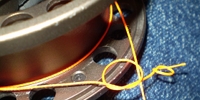
Let’s start with securing your fly-line backing to the reel. Simply said, best way to secure backing to your spool is to use an Arbor knot. This is unanimous advice in almost every book and every resource on the net. Good practices include making several wraps around the spool before securing the knot. This will more evenly distribute the pressure if by chance you ever end up losing all your line to a fish.

Backing to Fly-Line

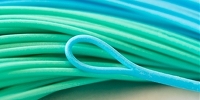
Knots will differ slightly based on how your fly-line is terminated. Quite a few of the new fly-lines today come from the manufacturer with a welded loop on each end. If you haven’t fly-fished in the last few years, this welded loop will be a new feature.

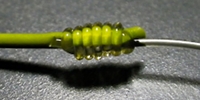
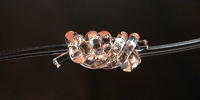
With Welded Loops – You will need to tie a loop for the adjoining end of your backing – this will be secured loop-to-loop with your fly-line. It is advised to tie the adjoining loop large enough to pass a fly-line spool clean through the loop, say maybe a loop eight inches (8″) in length. This larger loop makes it easier to swap out fly-lines when necessary. Loops most often tied in backing for this purpose are the Surgeon’s Loop, or the Bimini Twist. The Surgeon’s Loop is simple and for quick applications is tied most often. Use at least three (3) wraps to make secure and remember to tie an eight inch (8″) loop. The Bimini Twist is tied much more easily with two people, however can be tied by one person with a little practice. This is the strongest loop – it’s breaking strength is rated the highest of all loop knots.

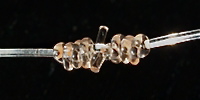
Without Welded Loops – Traditionally, the Nail knot was used for tying backing to fly-lines. It is a low profile knot and is typically used for greater strength with dissimilar line diameters. For some time now, a more popular knot used for securing backing to fly-line is the Albright knot. It also is used for securing to lines of dissimilar diameters. More fly-fishing experts seem to use the Albright knot more than any other.

Fly-Line to Leader

Here as well, knots will differ slightly based on how your fly-line is terminated. Below are solutions for lines with welded loops and some for lines without welded loops. Some experts say to get fly-lines to transfer energy from fly-line to leader more efficiently, using heavier monofilament is better for the base portion of your leader. Evidently, monofilament is advised for its flexibility and larger gauge. There are positive arguments for using fluorocarbon, however they don’t seem as convincing.

With Welded Loops – You will need to tie a loop for the base of your leader – this will be secured loop-to-loop with your fly-line. The loop is used for easily swapping out leaders when necessary. Loops most often tied in leaders are the Surgeon’s Loop, or the Perfection Loop. RIO (a major supplier of high quality fly lines and leaders) supplies their tapered leaders with hand tied Perfection Loops. This might suggest a Perfection Loop is a solid way to go. I also prefer the Perfection Loop – it is extremely fast and easy to tie.

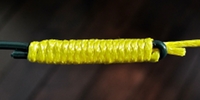
Without Welded Loops – Traditionally, the Nail knot is renown for tying the base portion of the leader to fly-lines. It is a low profile knot and is typically used for greater strength with dissimilar line diameters. As an old-school guy, I’ve always liked the look of a good Nail knot and feel like it moves through the guides a little easier, especially if you lube it with a little Chapstick. Typically this base portion of the leader is 40 or 50 pound monofilament (for saltwater applications) and should be at least two (2) feet long. The end of this base portion of leader can be terminated with a Surgeon’s Loop or Perfection Loop – it will allow for quickly swapping out leaders when fishing conditions so demand. If you are going to use a Surgeon’s Loop, make at least two (2) full wraps when using larger gauge monofilament.

Leader to Leader (tippet)

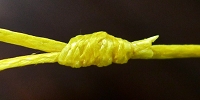
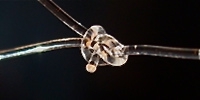
As you move past the base or butt section of monofilament leader, it would be advised to use fluorocarbon for the remaining leader and tippet. Fluorocarbon is not only thinner than monofilament, but is harder and somewhat stiffer. When stepping down portions of leader to meet your tippet, there are two knots that seem most popular, specifically the Surgeon’s knot and the Blood knot. Many find the Surgeon’s knot easy to tie. A small drawback to this knot is how square it can be. If you have smaller diameter line, use at least four (4) wraps. If you have larger diameter line, use at least two (2) full wraps. The Blood knot is my knot of choice. It not only has a reasonable profile (slips through guides nicely), but is very strong. Believe it or not, you can tie Blood knots very quickly.

Tippet to Fly

Many knots exist for securing flies to tippets. In freshwater fly-fishing, or when you need a fly to specifically behave as one with the line, an Improved Clinch knot is still used most often. In saltwater however, flies are fished below the surface and should move independent from the line. In this case, an open loop secures the fly to the line or tippet. This allows for more natural movement of the baitfish, shrimp, crab, etc. An endless amount of loop knots exist, however three of the most popular include the Non-Slip Mono, Perfection Loop, and Surgeon’s Loop. I use the perfection Loop as it is very quick to tie and is rated one of the highest for breaking strength. Remember to tie your loop relatively small. A good rule of thumb is to make your loop less than one quarter the length of your fly.

One last tip: If you are one to tie your own leaders like most other fly fishing experts, always carry some tapered leaders for contingency. If for some reason you have run out of leader or tippet material, having a quick and easy tapered leader ready to go is huge, especially if you are a good distance away from the boat, marina, or your lodge.

Questions or comments? Please feel free to comment/ reply to this post below – We will be glad to offer any additional advice.
[/column]

[column size=’1/3′]

Arbor Knot
Arbor Knot

Welded Loop
Welded Loop

Surgeon's Loop Knot with Backing
Surgeon’s Loop Knot

Bimini Twist
Bimini Twist

Albright Knot with Backing
Albright Knot

Surgeon's Loop Knot with Monofilament
Surgeon’s Loop Knot

Perfection Loop Knot with Monofilament
Perfection Loop Knot

Nail Knot
Nail Knot

Surgeon's Knot with Monofilament
Surgeon’s Knot

Blood Knot
Blood Knot

Improved Clinch Knot

Non-Slip Mono Loop Knot with Monofilament
Non-Slip Mono Loop Knot
[/column][/row]