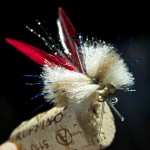
Capt JD

About Capt JD

In 1978 I was first introduced to stream fishing while backpacking in California's southern Sierra mountains. Can't say how inspiring it was to watch Rainbows making their way upstream, pool to pool, navigating book-like waterfalls etc. Crystal clear and cold water it was. I spent quite few years discovering the fisheries before being introduced to a fly-fishing rig. In 1982, I was introduced to an antique cane rod and click-pawl reel. The engineering of this reel and simple concept of throwing a weighted line to get a super-light artificial fly out into the middle of a stream made its lasting impression. I suppose it's my intrigue for activities and sports combining outdoor elements, strategy and a fair amount of physics that seemed to grip me. After quite a few years snow skiing, golfing, skeet shooting, yacht racing, and of course fly-fishing, I can now see how much physics plays a part in all of them. In my early years of fly-fishing, I discovered I could tie my own flies. If a fly needed more of one color than another, I could simply tie one to work more effectively. The endless number of materials and colors opened the door for design and creativity. The structuring and layering of materials added many more options. The combinations of size, texture, style, and functionality were endless. Needless to say, I was hooked. My experience with fly-fishing continued with discovering fisheries up and down the west coast, from California to Arctic Circle. In the early 1990s, I spent some time floating the Green and Teton rivers for Rainbows. In the mid 1990s, I was fortunate enough to fish Alaska, BC and NWT for Cutthroat, Rainbow and Lake Trout – the occasional Grayling was nice too. Moving to Hawaii in 2012 offered me a look at some sizable Bonefish and another amazing fishery. In 2014, I relocated to southern Florida and was knocked over by such an expansive fishery. Florida is truly the capital of sport fishing. Miles and miles of untapped fisheries are waiting for the next fly-fishing enthusiast...well, that and some really big fish. I hold a USCG Master Inland and Mate Near Coastal 50 Ton Captain's License with Assistance Towing and Auxiliary Sailing Endorsements. I also hold a NAUI Openwater 1 certification in SCUBA. Professionally, I have over 30 years in leading technical teams in project, program, and change management within IS, IT, Application Development, and high-tech construction. A majority of this experience was acquired within the aerospace, undersea, telecom, networking, engineering, and healthcare fields. I hold a Bachelor of Science degree in Engineering, Master of Science degree in Organizational Leadership, and professional certifications in project, service, and quality management. My fly-fishing journey has been amazing thus far - its discoveries are never ending and all inspiring to say the least. Let's keep it this way for all to come. Please take care of the fish you catch/ release and let's continue to work diligently minimizing our back-country footprint. - Capt JD.

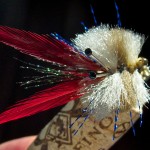
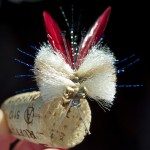
Blue Crab: Our Signature Merkin


Recreate fly patterns at home! Materials used in making this fly have been included below. Always keep in mind your local fly-fishing store will most likely have the materials referenced, and typically for less. Materials can also be found at Amazon or any other major on-line resource.

Fly-Tying Materials

[list]
[list_item]Mustad 34007SS (#4)[/list_item]
[list_item]UTC 210, tan[/list_item]
[list_item]Brass Eyes, medium, gold[/list_item]
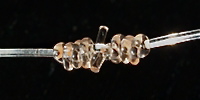
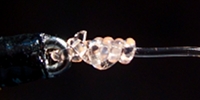
[list_item]Berkley Vanish 40 lb Fluorocarbon, clear, melted (dipped in Sally Hansen’s Black nail polish)[/list_item]
[list_item]EP Fiber, beige[/list_item]
[list_item]EP Fiber, eel green (across)[/list_item]
[list_item]Krystal Flash, royal blue[/list_item]
[list_item]Krystal Flash, black/ pearl[/list_item]
[list_item]Rooster Saddle, red[/list_item]
[list_item]Berkley Vanish 40 lb Fluorocarbon, clear (weed guard)[/list_item]
[/list]

Design Inspiration & Detail

If you fish South Florida and the Keys, you can’t have too many pink/ blue Merkin crabs in the fly box. Blue Crabs are indigenous and plentiful along all coastlines. Any combination of a natural, pink, and blue in the shape of a crab will yield Bonefish and Permit. Have fun experimenting!

Target Species

This particular fly was designed to attract Bonefish and Permit – Redfish and other species will also take the fly.

Bendback: Wired in Orange


Recreate fly patterns at home! Materials used in making this fly have been included below. Always keep in mind your local fly-fishing store will most likely have the materials referenced, and typically for less. Materials can also be found at Amazon or any other major on-line resource.

Fly-Tying Materials

[list]
[list_item]Mustad 34007SS Hook (#4)[/list_item]
[list_item]UTC 210 Thread, Black[/list_item]
[list_item]UTC Wire, Large, Hot Orange[/list_item]
[list_item]Bucktail, Orange[/list_item]
[list_item]Bucktail, Dark Brown[/list_item]
[list_item]Krystal Flash, Copper[/list_item]
[list_item]Krystal Flash, Fluorescent Fire Orange[/list_item]
[/list]

Design Inspiration & Detail

The inspiration behind the design included melting together the “easy to fish” characteristics of a bendback, an easy to tie Crazy Charlie pattern, wire wrapping for additional weight, and a nice burnt orange color to simulate shrimp. Shrimp on the barB for Bonefish!

Target Species

This particular fly was designed to attract Bonefish and Permit – many other species will also take the fly.

Caribbean Candy: Bonefish Clousers


Recreate fly patterns at home! Materials used in making this fly have been included below. Always keep in mind your local fly-fishing store will most likely have the materials referenced, and typically for less. Materials can also be found at Amazon or any other major on-line resource.

Fly-Tying Materials

[list]
[list_item]Mustad 34007SS (#4)[/list_item]
[list_item]UTC 210, fluorescent shell pink (fluorescent pink also pictured) [/list_item]
[list_item]Brass Eyes, small, nickel[/list_item]
[list_item]Krystal Flash, olive/ pearl[/list_item]
[list_item]Crystal Flash, mirror (manufactured by Rumpf)[/list_item]
[list_item]Bucktail, grey[/list_item]
[list_item]Arctic Fox Fur, white[/list_item]
[/list]

Design Inspiration & Detail

After making this fly and taking a good look at it, I could tell it was going to be a must-have for ever fly-box when fishing Caribbean waters. The white Arctic Fox and grey bucktail make a perfect natural and neutral base. Adding a splash of pink and some crystal flash really gave the fly some life. Be creative and change up colors. Add silicone legs maybe. Options for upgrading the pattern are endless.

Target Species

This particular fly was designed to attract Bonefish and Permit – many other species (i.e. Pompano, other Jacks, etc.) will also take the fly.

Keylime Crust: A Bonefish Clouser for the Keys


Recreate fly patterns at home! Materials used in making this fly have been included below. Always keep in mind your local fly-fishing store will most likely have the materials referenced, and typically for less. Materials can also be found at Amazon or any other major on-line resource.

Fly-Tying Materials

[list]
[list_item]Mustad 34007SS (#4)[/list_item]
[list_item]UTC 210, fluorescent chartreuse[/list_item]
[list_item]Beadchain Eyes, large, gold[/list_item]
[list_item]Krystal Flash, rainbow/ pearl[/list_item]
[list_item]Crystal Flash, mirror (manufactured by Rumpf)[/list_item]
[list_item]Bucktail, camel[/list_item]
[list_item]Arctic Fox Fur, white[/list_item]
[/list]

Design Inspiration & Detail

Another great fly for fishing South Florida and Caribbean flats. The natural colors and splash of chartreuse are perfect for attracting all crustacean eating predators. As always, adding a splash of crystal flash really gives the fly some life. Be creative and change up colors. Add silicone legs maybe. Options for upgrading the pattern are endless.

Target Species

This particular fly was designed to attract Bonefish and Permit – many other species (i.e. Pompano, other Jacks, etc.) will also take the fly.

Bonefish Clouser: Pale Orange


Recreate fly patterns at home! Materials used in making this fly have been included below. Always keep in mind your local fly-fishing store will most likely have the materials referenced, and typically for less. Materials can also be found at Amazon or any other major on-line resource.

Fly-Tying Materials

[list]
[list_item]Mustad 34007SS Hook (#4)[/list_item]
[list_item]UTC Thread, 210, Black[/list_item]
[list_item]Brass Eyes, Medium, Gold[/list_item]
[list_item]Krystal Flash, Gold[/list_item]
[list_item]Krystal Flash, Copper[/list_item]
[list_item]Krystal Flash, Fluorescent Fire Orange[/list_item]
[list_item]Bucktail, Pale Orange[/list_item]
[list_item]Badger, Small[/list_item]
[/list]

Design Inspiration & Detail

Another great fly for fishing South Florida and Caribbean flats. The natural colors and splash of pale orange are perfect for attracting all crustacean eating predators. As always, adding a splash of crystal flash really gives the fly some life. Be creative and change up colors. Add silicone legs maybe. Options for upgrading the pattern are endless.

Target Species

This particular fly was designed to attract Bonefish and Permit – many other species (i.e. Pompano, other Jacks, etc.) will also take the fly.

Whip-Finishing: Final Steps in Tying a Fly


Finishing a fly can be done a number of ways. I’d like to share two of the most popular ways to finish a fly and demonstrate one of them with video. Before reaching the point of finishing a fly, make any additional thread wraps to shape the head of the fly. Shaping is key – many flies need to be shaped to better match the intended bait. For example, use a longer and consistent set of threads to simulate the nose of a squid, a longer and narrower angle for Clousers, and so on.

At this point, it’s time to tie off your thread. One popular way to snug up the tail end of your thread is to make a series of half-hitches. If half hitches are preferred, make at least three (3) of them and finish with a good amount of head cement. If you prefer whip-finishing (as most of us do), whip-finish twice, using five (5) wraps each time.

Keep in mind, whip-finishing by hand is easy enough. You may find a whip-finishing tool is not necessary. Above is a video demonstrating how whip finishing technically secures your thread. I’ve used larger format materials to help show what is actually taking place during the process. After following along with the mechanics of whip-finishing, the whole process becomes much easier to understand and practice.

Questions or comments? Please feel free to comment/ reply to this post below – We will be glad to offer any additional advice.

2015 Monthly Fly Giveaway for January!

Subscribe to our Newsletter and be eligible to win each month!


Monthly, we give away free flies to those currently subscribed to our Newsletter! A winner is chosen each month at random from our subscription base. Each winner is announced on or before the seventh (7th) day following each Promotion Period. Subscribing is easy – see right hand side of this post to sign up!

Win one free fly by being a current subscriber to our Newsletter! *

Win two free flies by also “liking” our Facebook page! *

Win three free flies by also being a current follower on Twitter! *

Participants must currently be meeting the above Eligibility Requirements at 11:59PM on the last day of each month (the “Promotion Period”) to be eligible to win.

Winner to be announced on or before FEB 7, 2015

* See official rules for details.

Eligible flies for this promotion include our Bonefish Clouser in Pale Orange, Caribbean Candy, and Keylime Crust – see below.

Tiger Shrimp


Recreate fly patterns at home! Materials used in making this fly have been included below. Always keep in mind your local fly-fishing store will most likely have the materials referenced, and typically for less. Materials can also be found at Amazon or any other major on-line resource.

Fly-Tying Materials

[list]
[list_item]Mustad 34007SS (#4)[/list_item]
[list_item]UTC 210, black[/list_item]
[list_item]Brass Eyes, medium, gold[/list_item]
[list_item]Bucktail, dark brown[/list_item]
[list_item]Marabou, grizzly, burnt orange[/list_item]
[list_item]Krystal Flash, gold[/list_item]
[list_item]Krystal Flash, black/ pearl[/list_item]
[/list]

Design Inspiration & Detail

Another great fly for fishing the backwaters of South Florida. The natural colors and splash of pale orange are perfect for attracting all crustacean eating predators. As always, adding a splash of crystal flash really gives the fly some life. Be creative and change up colors. Add silicone legs maybe. Options for upgrading the pattern are endless.

Target Species

This particular fly was designed to attract Snook and Redfish – jacks many other species will also take the fly. Toss this up within two feet of the mangrove line, it’s lethal.

Fly-Fishing Knots: Rigging Your Rod & Reel


Many resources are available on the net these days, all advising which knots are best for rigging a fly-line and leader. A majority of these knots have a similar breaking strength, especially when you look at all the loose variables in tying them. For example, how many wraps were used, are the adjoining lines similar in size, is one line monofilament and the other fluorocarbon, etc. If a super strong knot is used for tying the wrong materials together, the knot won’t live up to it’s tested breaking strength.

Keep in mind, some knots are easier to tie in the elements (i.e. darkness, cold temperatures, high wind, etc.). One main goal in my post today is to give readers a sense of peace when it comes to choosing what knots work best when rigging fly-lines and leaders. Choose strong, easy-to-tie, and low profile knots in the beginning may be your best bet. If you are after monster fish, well, seek professional guides who specialize in landing trophy fish. Ask for “fish specific” advice on the best knot for your application.

[row][column size=’2/3′]

Reel Spool & Backing

Let’s start with securing your fly-line backing to the reel. Simply said, best way to secure backing to your spool is to use an Arbor knot. This is unanimous advice in almost every book and every resource on the net. Good practices include making several wraps around the spool before securing the knot. This will more evenly distribute the pressure if by chance you ever end up losing all your line to a fish.

Backing to Fly-Line

Knots will differ slightly based on how your fly-line is terminated. Quite a few of the new fly-lines today come from the manufacturer with a welded loop on each end. If you haven’t fly-fished in the last few years, this welded loop will be a new feature.

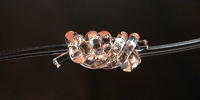
With Welded Loops – You will need to tie a loop for the adjoining end of your backing – this will be secured loop-to-loop with your fly-line. It is advised to tie the adjoining loop large enough to pass a fly-line spool clean through the loop, say maybe a loop eight inches (8″) in length. This larger loop makes it easier to swap out fly-lines when necessary. Loops most often tied in backing for this purpose are the Surgeon’s Loop, or the Bimini Twist. The Surgeon’s Loop is simple and for quick applications is tied most often. Use at least three (3) wraps to make secure and remember to tie an eight inch (8″) loop. The Bimini Twist is tied much more easily with two people, however can be tied by one person with a little practice. This is the strongest loop – it’s breaking strength is rated the highest of all loop knots.

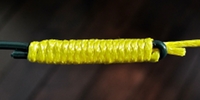
Without Welded Loops – Traditionally, the Nail knot was used for tying backing to fly-lines. It is a low profile knot and is typically used for greater strength with dissimilar line diameters. For some time now, a more popular knot used for securing backing to fly-line is the Albright knot. It also is used for securing to lines of dissimilar diameters. More fly-fishing experts seem to use the Albright knot more than any other.

Fly-Line to Leader

Here as well, knots will differ slightly based on how your fly-line is terminated. Below are solutions for lines with welded loops and some for lines without welded loops. Some experts say to get fly-lines to transfer energy from fly-line to leader more efficiently, using heavier monofilament is better for the base portion of your leader. Evidently, monofilament is advised for its flexibility and larger gauge. There are positive arguments for using fluorocarbon, however they don’t seem as convincing.

With Welded Loops – You will need to tie a loop for the base of your leader – this will be secured loop-to-loop with your fly-line. The loop is used for easily swapping out leaders when necessary. Loops most often tied in leaders are the Surgeon’s Loop, or the Perfection Loop. RIO (a major supplier of high quality fly lines and leaders) supplies their tapered leaders with hand tied Perfection Loops. This might suggest a Perfection Loop is a solid way to go. I also prefer the Perfection Loop – it is extremely fast and easy to tie.

Without Welded Loops – Traditionally, the Nail knot is renown for tying the base portion of the leader to fly-lines. It is a low profile knot and is typically used for greater strength with dissimilar line diameters. As an old-school guy, I’ve always liked the look of a good Nail knot and feel like it moves through the guides a little easier, especially if you lube it with a little Chapstick. Typically this base portion of the leader is 40 or 50 pound monofilament (for saltwater applications) and should be at least two (2) feet long. The end of this base portion of leader can be terminated with a Surgeon’s Loop or Perfection Loop – it will allow for quickly swapping out leaders when fishing conditions so demand. If you are going to use a Surgeon’s Loop, make at least two (2) full wraps when using larger gauge monofilament.

Leader to Leader (tippet)

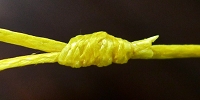
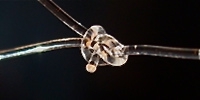
As you move past the base or butt section of monofilament leader, it would be advised to use fluorocarbon for the remaining leader and tippet. Fluorocarbon is not only thinner than monofilament, but is harder and somewhat stiffer. When stepping down portions of leader to meet your tippet, there are two knots that seem most popular, specifically the Surgeon’s knot and the Blood knot. Many find the Surgeon’s knot easy to tie. A small drawback to this knot is how square it can be. If you have smaller diameter line, use at least four (4) wraps. If you have larger diameter line, use at least two (2) full wraps. The Blood knot is my knot of choice. It not only has a reasonable profile (slips through guides nicely), but is very strong. Believe it or not, you can tie Blood knots very quickly.

Tippet to Fly

Many knots exist for securing flies to tippets. In freshwater fly-fishing, or when you need a fly to specifically behave as one with the line, an Improved Clinch knot is still used most often. In saltwater however, flies are fished below the surface and should move independent from the line. In this case, an open loop secures the fly to the line or tippet. This allows for more natural movement of the baitfish, shrimp, crab, etc. An endless amount of loop knots exist, however three of the most popular include the Non-Slip Mono, Perfection Loop, and Surgeon’s Loop. I use the perfection Loop as it is very quick to tie and is rated one of the highest for breaking strength. Remember to tie your loop relatively small. A good rule of thumb is to make your loop less than one quarter the length of your fly.

One last tip: If you are one to tie your own leaders like most other fly fishing experts, always carry some tapered leaders for contingency. If for some reason you have run out of leader or tippet material, having a quick and easy tapered leader ready to go is huge, especially if you are a good distance away from the boat, marina, or your lodge.

Questions or comments? Please feel free to comment/ reply to this post below – We will be glad to offer any additional advice.
[/column]

[column size=’1/3′]
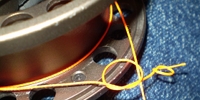
Arbor Knot
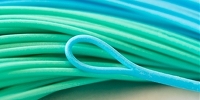
Arbor Knot

Welded Loop
Welded Loop

Surgeon's Loop Knot with Backing
Surgeon’s Loop Knot

Bimini Twist
Bimini Twist

Albright Knot with Backing
Albright Knot

Surgeon's Loop Knot with Monofilament
Surgeon’s Loop Knot

Perfection Loop Knot with Monofilament
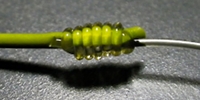
Perfection Loop Knot

Nail Knot
Nail Knot

Surgeon's Knot with Monofilament
Surgeon’s Knot

Blood Knot
Blood Knot

Improved Clinch Knot
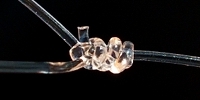

Non-Slip Mono Loop Knot with Monofilament
Non-Slip Mono Loop Knot
[/column][/row]